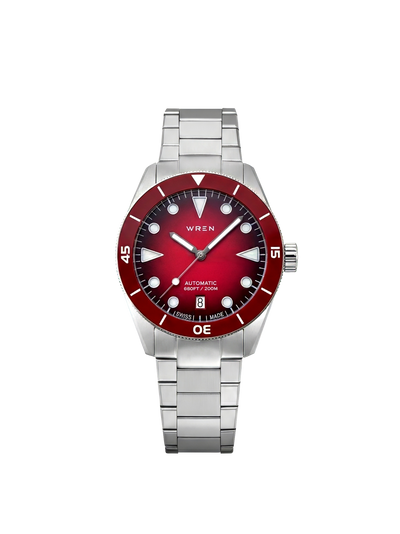
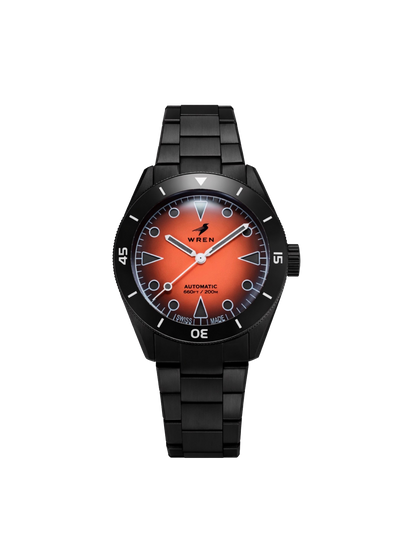
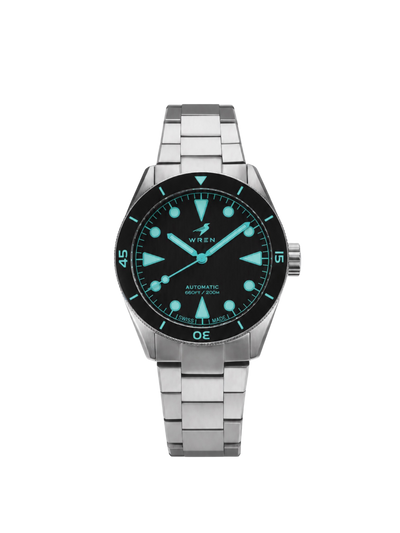
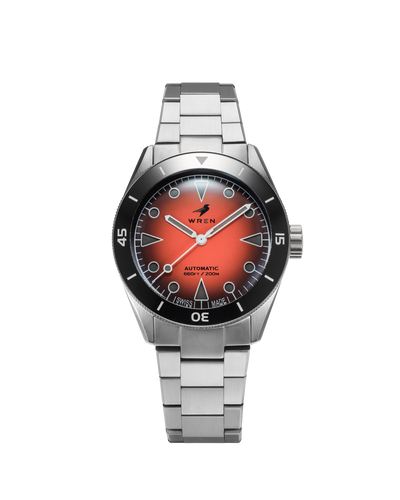

The thickness on a spec sheet can mean two different things. Here is how brands measure it, what thin actually means for a dive watch, and the numbers worth knowing.
Thickness is the height of a watch from the back of the case to the top of the crystal, in millimeters. It is the number that decides whether a watch slides under a cuff and whether it feels like a watch or a puck, and it is also the least consistently measured number on any spec sheet. Some brands quote the case alone, some include the crystal, and the difference can be more than a millimeter. For an automatic dive watch, under 11mm is thin, 11 to 12.5mm is slim, 12.5 to 14mm is normal, and anything over 14mm is thick. Here is how to read the number, how to measure it yourself, and where the watches people actually buy land.

Why the same watch can have two thicknesses
There is no rule that says where a thickness measurement starts and stops. Most brands measure from the lowest point of the caseback to the highest point of the crystal, which is the honest number, because that is the space the watch takes up on your wrist. Some measure the case only, from the caseback to the top of the bezel, and leave the crystal out. On a flat crystal that is a difference of a few tenths of a millimeter. On a domed or box sapphire, the kind that rises above the bezel like a vintage acrylic, it is a millimeter or more.
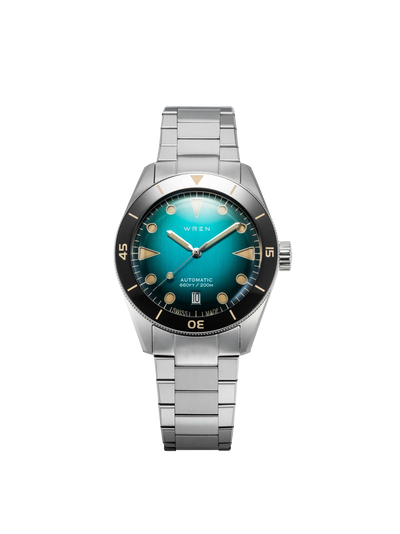
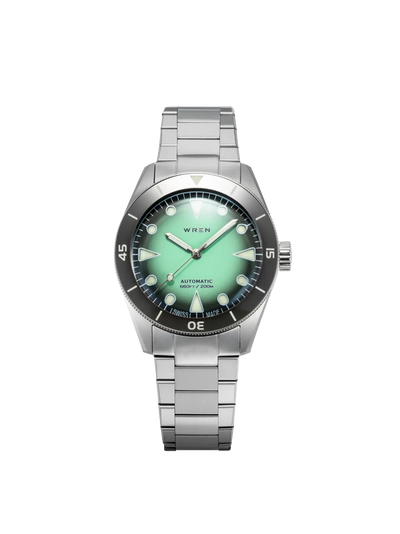
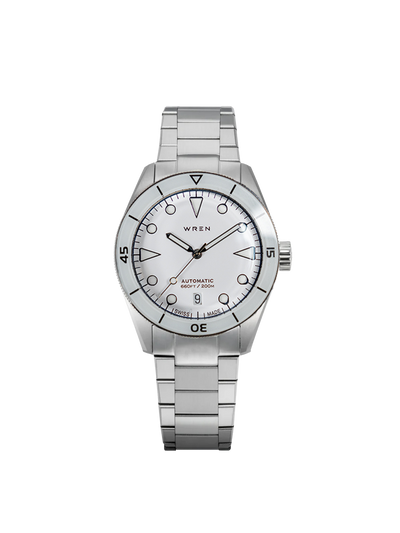
That is why you will see the same watch described as 11.9mm on one site and 12.5mm on another. Neither number is wrong. One is the case and one is the watch. When I write a spec for a Wren I include the crystal, so the Diver 38 is 10.7mm with its box sapphire on top, and I say so on the page. When a brand does not say which, assume the smaller of the two measurements and add a millimeter if the crystal is domed.

The caseback matters too. A domed caseback adds to the measured height but sinks into the wrist a little, so a 12mm watch with a domed back can sit lower than a 12mm watch with a flat one. Display casebacks are usually flatter than solid ones, which is one reason a watch with an exhibition back can come in thinner than you expect.
What counts as thin
The limit on thickness is the movement, then the water resistance. A Swiss automatic like the Sellita SW200-1 or the ETA 2824 is 4.6mm tall. The SW300-1 and the ETA 2892 are 3.6mm. A millimeter in the movement is a millimeter in the watch, which is why the thinnest automatic divers almost all run a 2892-class caliber and why I put the SW300-1 in the Diver 38. A dive watch then needs a screw-down caseback with a gasket deep enough to hold 200 meters, a crystal thick enough to take the pressure, and a bezel on top. Add it up and 10mm is close to the floor for a real 200m automatic. Under 10mm takes a flat crystal and an engineered case, and only a couple of watches in the world get there.

So the bands I use are these. Under 11mm is thin for an automatic diver and rare. 11 to 12.5mm is slim and where most well-designed small divers sit. 12.5 to 14mm is normal, and most 40 to 42mm divers from the big brands live here. Over 14mm is thick, and over 15mm you are into chronographs and oversized tool watches. A quartz or solar watch can go thinner than any of this because the movement is a few millimeters tall, which is why a Citizen Eco-Drive diver at 11.6mm is not an achievement in the way a 10.7mm automatic is.
Why thickness changes how big a watch looks
Thickness is the second number that decides fit, after lug-to-lug, and it affects how big a watch reads more than diameter does. A 38mm watch at 13mm looks and feels bigger on the wrist than a 40mm watch at 10.5mm, because the thick one stands up off the wrist and catches the light on its case side, and the thin one lies down. Thin watches also wear smaller under a shirt cuff, which is where most people notice thickness for the first time. A cuff clears about 11 to 12mm comfortably. Above that the watch catches on the way through.

The other thing a thin case does is let a smaller lug-to-lug work. A thick watch with short lugs looks like a tin on the wrist. A thin watch with the same lugs looks like it was made for you. If you are shopping for a small wrist, read lug-to-lug first, then thickness, then diameter. Diameter is the one that matters least.
How to measure a watch yourself
You need calipers, which cost about fifteen dollars and are the only tool worth owning for this. Close the jaws on the watch from the lowest point of the caseback to the highest point of the crystal, with the watch lying crystal up on a table. Do not include the crown. Do not measure at the bezel edge, because on most divers the crystal sits above the bezel. If the caseback is domed, measure to the dome, since that is what the spec sheets that include the crystal are doing too.
If you want the case-only number as well, measure a second time from the caseback to the top of the bezel. The difference between the two is the crystal height, and it tells you how much of the watch is sapphire. On the Diver 38 the case is under 10mm and the box sapphire takes it to 10.7mm, which is most of the reason the watch looks vintage from the side and modern from the front.
The thickness numbers worth knowing
These are small divers, 36 to 39mm across, measured or quoted the way each brand quotes them, with the crystal included where the brand says so.
- VPC Type 39VM: 9.34mm including the flat crystal. The thinnest 200m automatic diver I know of.
- Lorier Neptune: 10.3mm, with a domed acrylic crystal.
- Dan Henry 1975 Skin Diver: 10.5mm, high-domed sapphire, 150m.
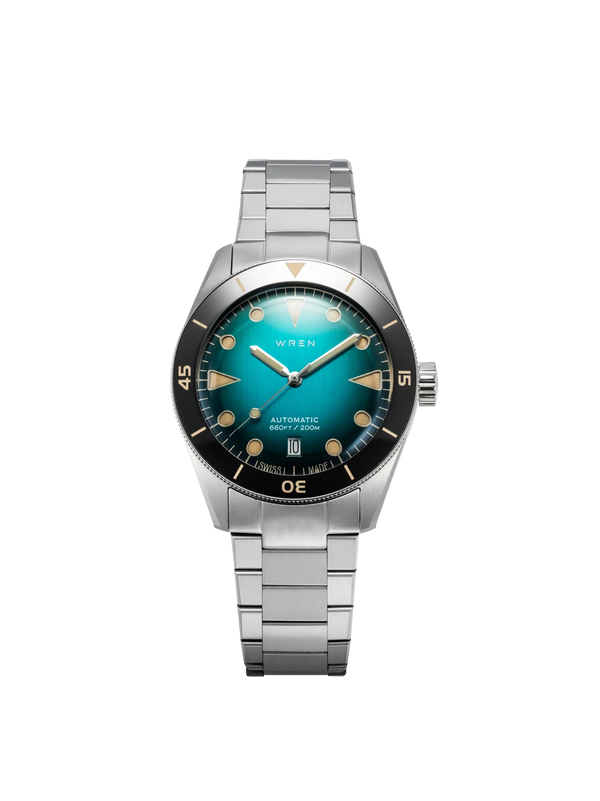
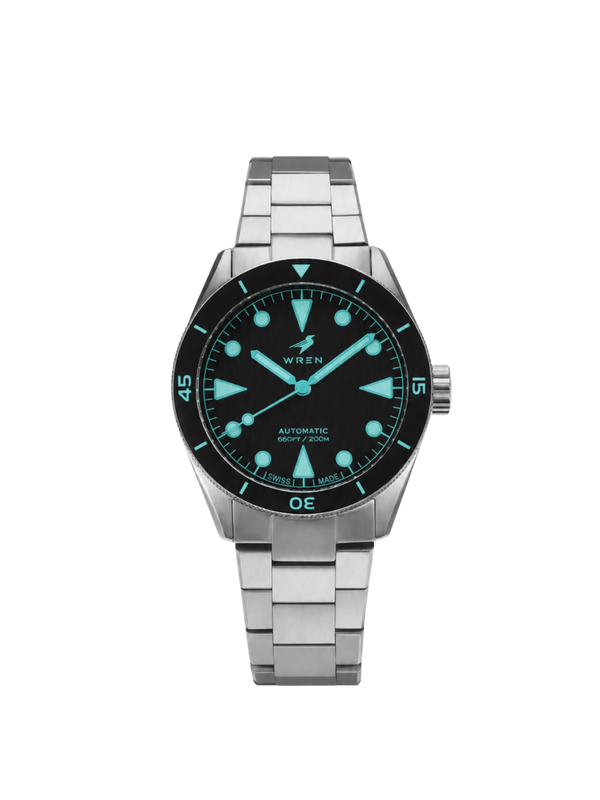
- Wren Diver 38: 10.7mm including the box sapphire, 200m.
- Doxa SUB 200T: 10.7mm, 200m.
- Blancpain Fifty Fathoms Bathyscaphe 38mm: 10.77mm, 300m.
- Tudor Black Bay 54: about 11mm. Tudor does not publish a figure.
- Christopher Ward C60 Trident Pro 300 38mm: 11mm, 300m.
- Citizen Promaster Dive 37mm: 11.6mm, solar.
- Vaer D5 Meridian 39mm: 11.9mm case, 12.5mm with the crystal.
- Serica 5303: 12.2mm including the crystal, 300m.
- Longines Legend Diver 39mm: 12.7mm, 300m, internal bezel.
Two things stand out. Everything under 11mm except the Dan Henry runs a 2892-class movement or a Doxa equivalent, and the Citizen is the only quartz on the list and it is not the thinnest, because Citizen built it to an ISO dive standard rather than to a thickness target. Thin is a choice that costs money in the movement, and it shows.
Where Wren lands
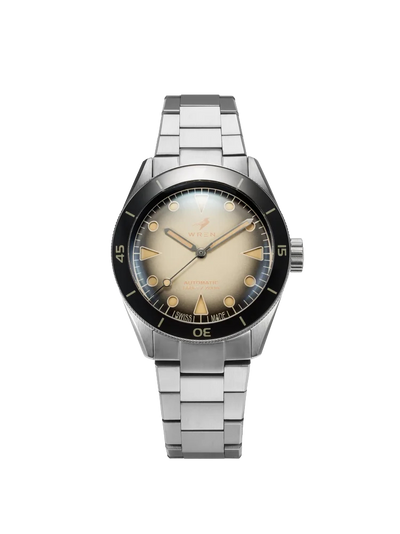
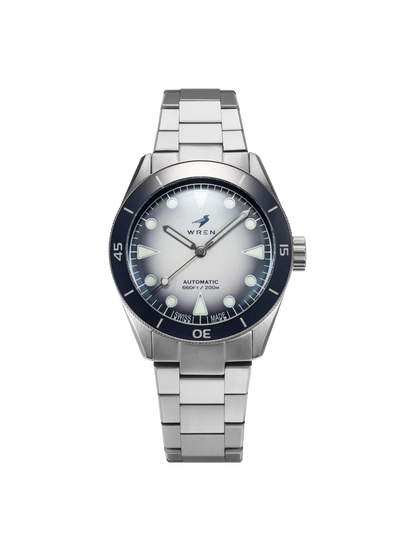
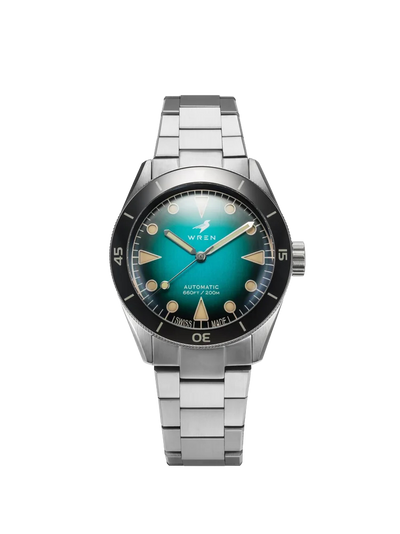
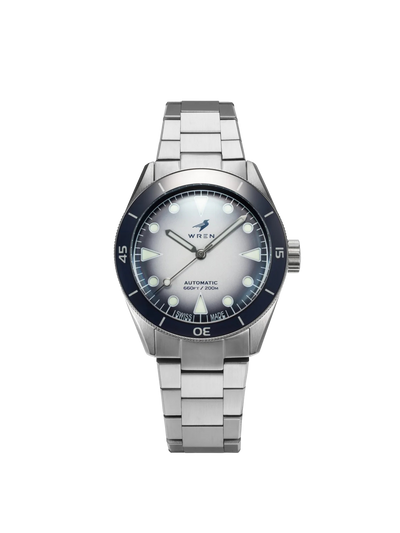
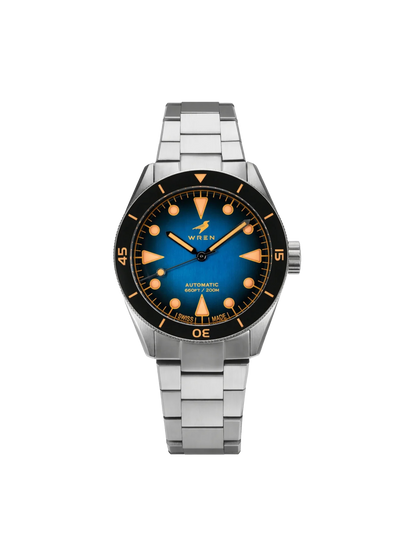
The Diver 38 is 10.7mm including the box sapphire, 45mm lug-to-lug, 200m, on a Sellita SW300-1. The case itself is under 10mm. The crystal is the rest. Getting there cost us a detail most people never notice. The seconds hand sits above the bezel, up inside the crystal, so to keep the watch this thin we curved the tip of the seconds hand downward to follow the inside of the box sapphire. A flat hand would have needed a taller crystal, and a taller crystal would have been a thicker watch.
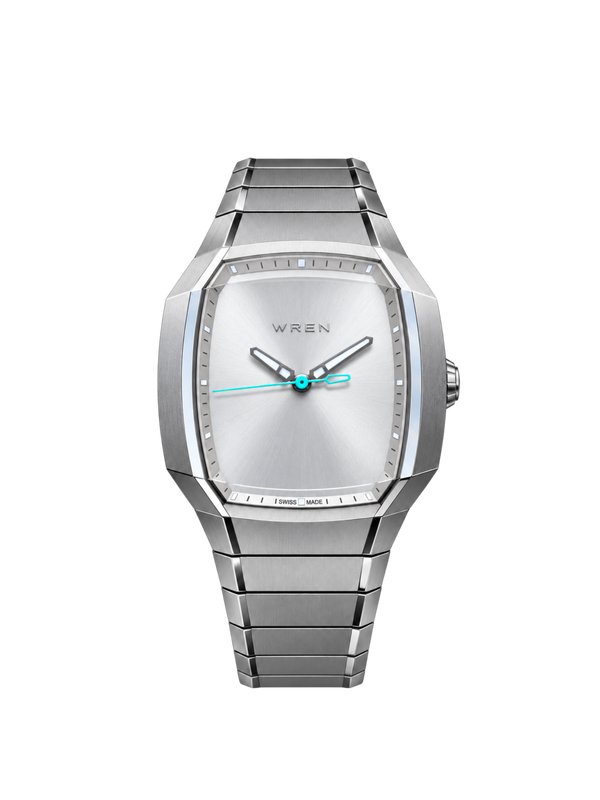
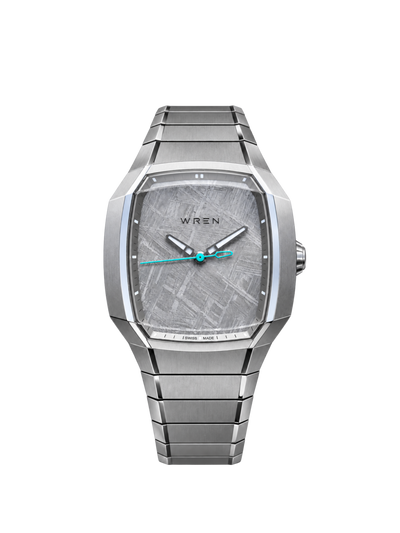
The Diver One is 13.3mm including its crystal in steel, at 41mm with a 47mm lug-to-lug, which is normal for a 200m diver on a 4.6mm movement. When we made the Diver One Titanium we kept every other dimension identical and took the thickness down to 12.4mm, nearly a millimeter off the same case. That is how we work. The next version of a watch should be better than the last in some way you can measure. The Vessel is 10.6mm at 39mm, and that includes a sapphire crystal faceted on both sides, on the same SW300-1 as the Diver 38. It is not a dive watch, so at 70m the case does not need a diver's gasket depth or a bezel, and the crystal is a bigger share of the height than on any other Wren. How that crystal is cut is a different post.

If you are between watches and the spec sheet is the only thing you have to go on, the question to ask is not how thick it is but how thick it is and what that includes. The brand that tells you both is the one measuring honestly.
Questions people ask
Is 12mm thick for a watch? No. 12mm is normal for an automatic dive watch and slim for one with 300m of water resistance. It is thick for a dress watch, where 8 to 10mm is the norm.
What is the thinnest automatic dive watch? For a real 200m rating, the VPC Type 39VM at 9.34mm. Among watches you can buy readily, the Doxa SUB 200T, the Wren Diver 38 and the Blancpain Bathyscaphe 38 all sit at 10.7 to 10.8mm.
Does the crystal count toward thickness? It should, because it is part of the watch sitting on your wrist, but not every brand includes it. If a figure looks too good, check whether it says case or watch.
Is a thinner watch better? It wears better and clears a cuff. It also usually means a more expensive movement and sometimes a flatter crystal. A watch can be too thin to feel like a tool watch, which is a matter of taste.
How thick is the Wren Diver 38? 10.7mm including the box sapphire crystal. The case alone is under 10mm.
Read next
Lug-to-lug explained · What 200m water resistance means · Sapphire crystals explained · The 38mm dive watch, compared