

Almost every watch over a few hundred dollars has a sapphire crystal, and almost nobody knows what that buys them. Here is what sapphire is, why it does not scratch but can crack, what the shape of the crystal does to the dial, what the anti-reflective coating is actually doing, and why the Vessel's crystal took two tries and a specialist.
What the crystal is
The crystal is the window over the dial. It has three jobs: keep water and dust out, survive what your wrist runs into, and let you read the time without fighting reflections. Three materials have done that job over the years. Acrylic, which is plastic, soft and easy to polish, and what most vintage watches use. Mineral glass, which is hardened glass, cheap and reasonably scratch resistant. And sapphire, which is what nearly every mechanical watch uses now.
Watch sapphire is not mined. It is synthetic corundum, pure aluminum oxide grown in a furnace into a single crystal, then sliced, ground and polished. Chemically it is the same material as the gemstone, minus the trace elements that make a natural sapphire blue. The result is a 9 on the Mohs scale, about 2,000 on the Vickers hardness scale that the industry uses for cases. Steel is about 200. Mineral glass is about 500 to 600. Only diamond and a few exotic ceramics are harder, which is why a sapphire crystal can take twenty years of door frames, keys and desk edges and still look new.
Scratchproof is not shatterproof
Hardness and toughness are different properties, and sapphire has one without the other. Hardness is resistance to scratching, which is a surface sliding across the material. Toughness is resistance to cracking, which is energy arriving all at once. Sapphire is extremely hard and only moderately tough. Nothing you carry in a pocket will mark it, but a sharp knock to the edge of the crystal, the kind a watch gets when it slides off a bathroom counter onto tile, can crack it. Acrylic, the softest of the three, is the one that survives that fall.
In practice sapphire breaks rarely, and when it does it is usually the edge, which is the thinnest and least supported part. A thicker crystal helps, and so does a bezel that sits proud of the crystal and takes the hit first, which is one of the quieter reasons dive watches with raised bezels tend to go through life with their crystals intact.
The useful rule: sapphire is the right choice for a watch you wear every day, and the two things that will actually hurt it are a hard edge impact and, occasionally, a diamond. A diamond ring on the other hand is harder than the crystal, and over years it can leave a fine haze on a sapphire. That is the one scratch sapphire cannot shrug off.
Flat, domed and box
The shape of the crystal changes how the dial reads more than most buyers expect, and it is worth knowing the three common ones.
Flat. A plain disc, the easiest to make and the one that reflects the most, because a flat surface sends a whole window or lamp straight back at you. Modern, thin, and the usual choice on dress watches and anything built to be slim.
Domed. Curved on top, and on a double-domed crystal curved underneath as well so the thickness stays even. A dome breaks up reflections, since no single angle returns the whole light source, and it gives the dial a sense of depth. Done well it is the most legible shape. Done badly, with a dome on top and a flat underside, it magnifies the edge of the dial as you tilt your wrist.
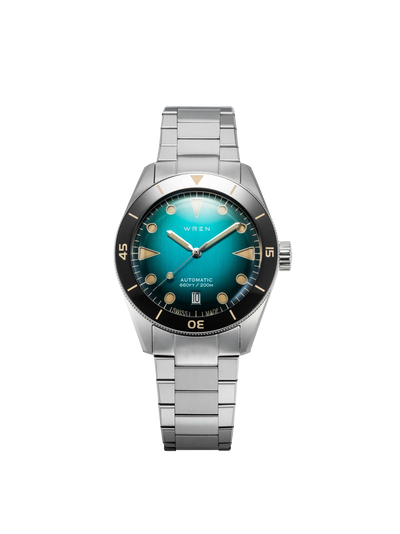
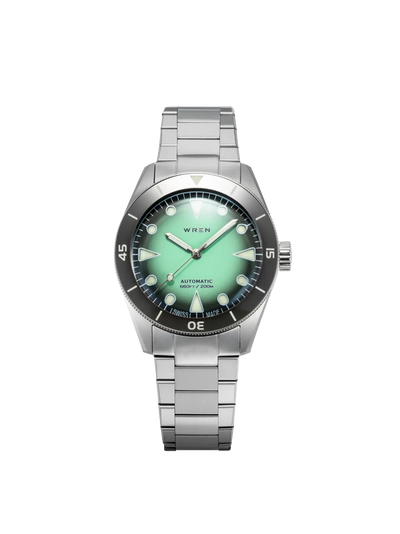
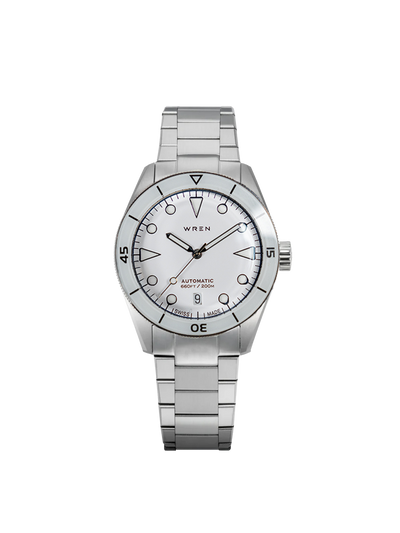
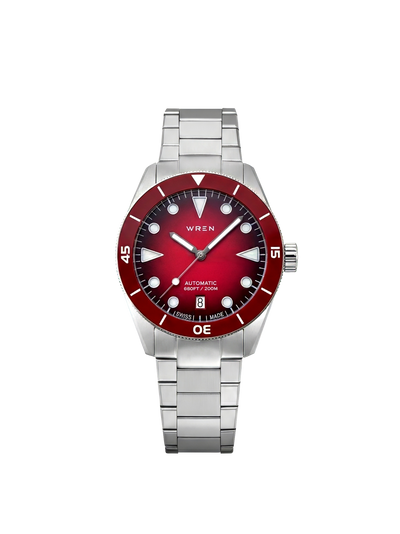
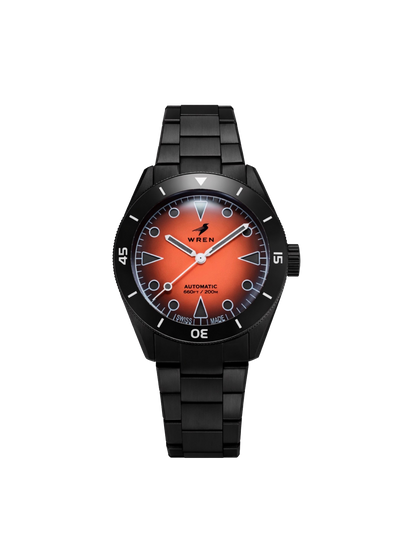
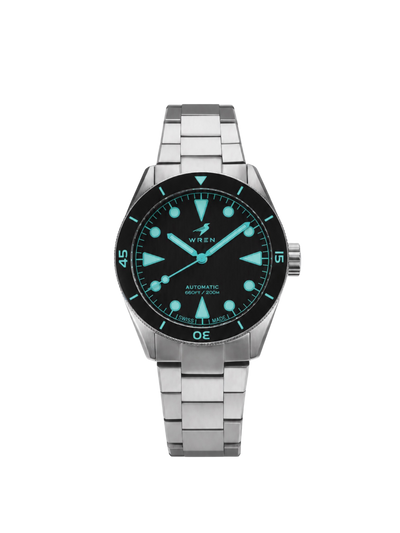
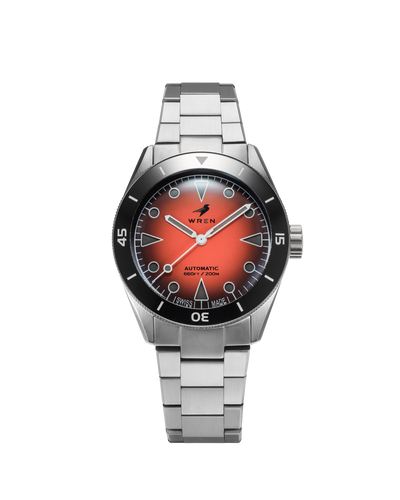
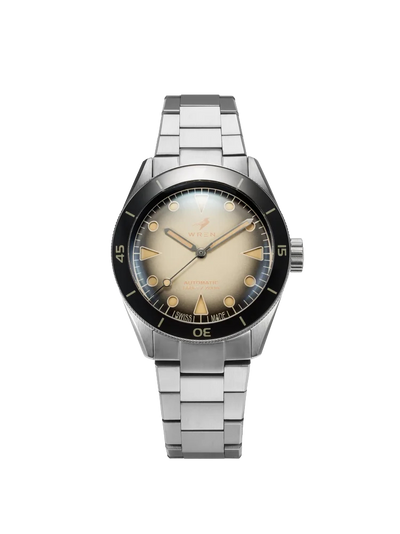
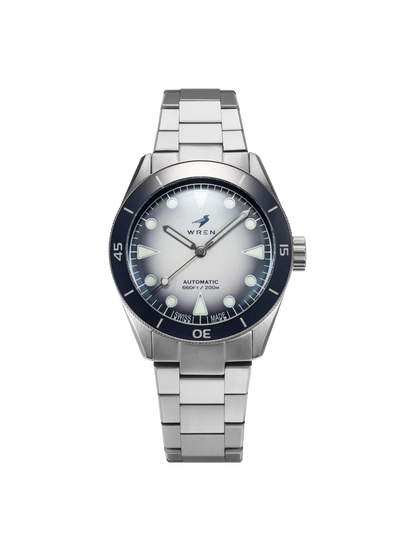
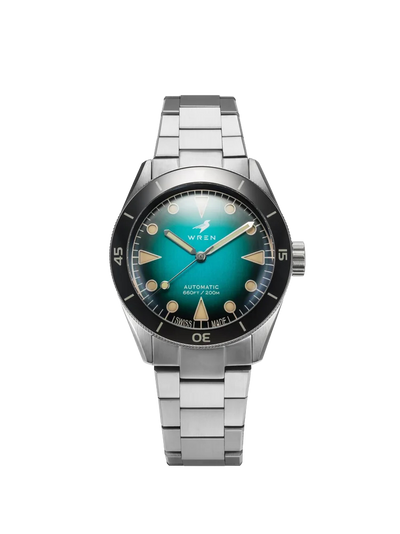
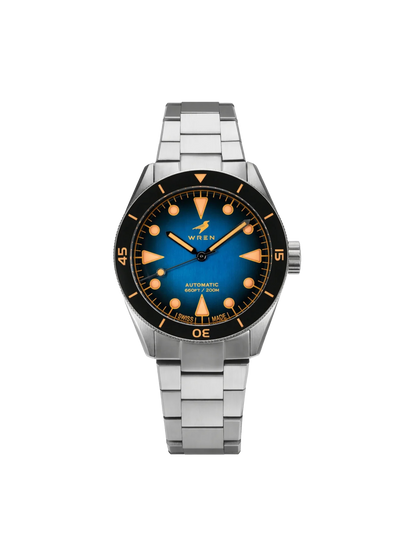
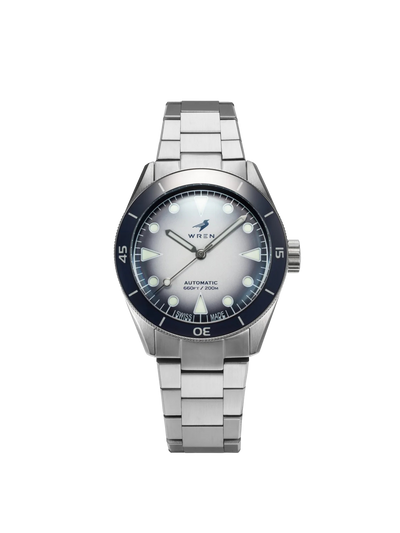
Box. A flat top with tall sides, so the crystal stands up off the case like a block. It is the vintage look, borrowed from the acrylic crystals of the 1960s, and it is what every Wren diver uses. The tall sides catch the light and let you see the dial from the side, which is part of the appeal, and they add height, which is why a box crystal watch is a little thicker than the case alone suggests. The Diver 38's 10.7mm includes the crystal.
What the coating is doing
Bare sapphire reflects about eight percent of the light that hits it, and because the material is so clear, what you see in a bright room is not the dial but the window behind you. Anti-reflective coating is a thin layer, usually a few hundred nanometers of a mineral like magnesium fluoride, that cancels those reflections by interference. The faint blue or purple sheen you see on a crystal at an angle is the coating.
There are two ways to apply it. Inside only, on the surface facing the dial, which removes the reflection that bounces between the crystal and the dial and leaves the outer surface as bare sapphire. Or both sides, which makes the crystal almost disappear in photographs and is why some watches look like they have no crystal at all.
The trade is durability. The coating is far softer than the sapphire under it, so a double-coated crystal picks up marks the sapphire itself never would. They look like scratches but they are not; they are scuffs in the coating, and they show as rainbow-edged streaks that no amount of polishing will remove. This is the main reason the better-made watches, including every Wren, coat the inside only. You give up a little of the vanishing-crystal effect and keep a surface that still looks new in a decade.
How to tell what you have
Sapphire pulls heat out of your skin faster than glass does, so it feels colder when you touch it, and it stays colder for longer. Reflections off sapphire tend to carry that blue or purple tint from the coating, while mineral glass reflects more neutrally. A drop of water beads tighter on sapphire. None of those is proof. If it matters, a jeweler's diamond tester reads sapphire in a second, since the tester works on thermal conductivity and sapphire sits far above glass. Any watch sold as sapphire that fails that test is not what it claims.
The Vessel's crystal
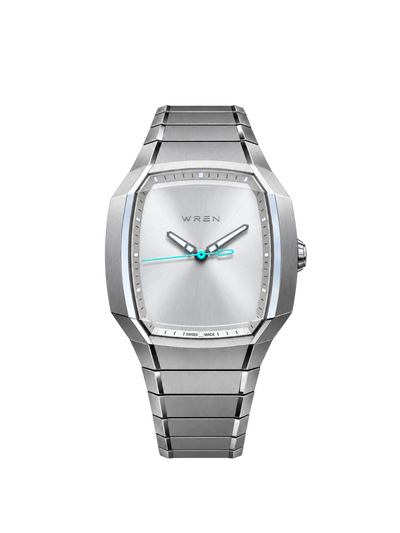
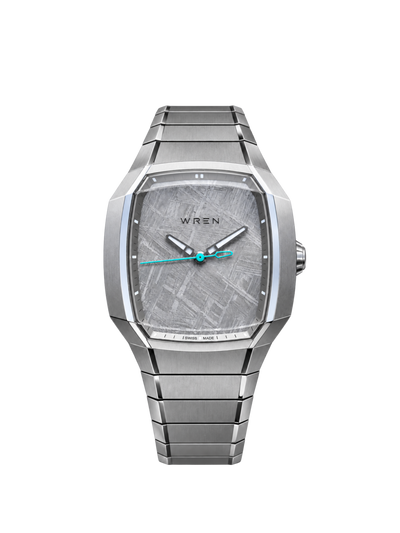
Everything above describes crystals made as one repeatable surface: a disc, a dome, a box. The Vessel's crystal is the case where that stopped being true, and it is the reason the watch exists in the shape it does.
The idea was a crystal faceted on top, with the facets at twelve and six curving as they run across the dial rather than meeting it in a straight line. Faceted sapphire is not new. The problem with it is the one described above under domes: cut facets into the top of a crystal and leave the underside flat or domed, and the dial bends and shifts under each facet as you tilt your wrist. The fix was to cut the same curved facets again on the underside, as a negative of the top, so that light passes through two matching surfaces and the dial reads true.
The first prototypes came back with the top right and the underside facets straight. Ninety-five out of a hundred crystals failed. The manufacturer that made them refused to attempt the curved underside, and so did every other house we asked, until a specialist better known for making entire watch cases out of sapphire agreed to try. The second round came back correct, with one in five failing instead of nineteen in twenty, and that is the crystal in the production watch. It costs more to make than the movement behind it.
The two stories behind that are written up on their own: why faceted crystals distort the dial, and how the Vessel doesn't, which is the optics, and five in a hundred, which is the yield. I told the longer version, starting with the structure at Hudson Yards the watch is named for, in the Vessel release on Wrist Enthusiast.
One more use for sapphire
Hardness is not the only reason to use it. Sapphire is transparent all the way through, which is why the Diver 38 Mad has a sapphire bezel rather than a ceramic one: the lume is laid under the sapphire across the entire bezel surface, so the whole ring glows at night rather than just the scale. Ceramic can only be lumed where it is cut. It is the same material doing a different job, and a good example of choosing a part for what it can do rather than what the spec sheet calls it.
Questions people ask
Is a sapphire crystal really scratchproof? Against anything you normally encounter, yes. Keys, steel, concrete and sand will not mark it. A diamond will, slowly, and so will some ceramic tile edges on a hard impact.
Can a sapphire crystal crack? Yes. It is very hard but only moderately tough, so a sharp knock to the edge can crack it where mineral glass or acrylic might survive. It is rare, and a raised bezel protects against most of it.
Why does my sapphire crystal have scratches? Almost always they are scuffs in an outer anti-reflective coating, not in the sapphire. Rainbow-edged streaks are the giveaway. Inside-only coating avoids this.
What is the difference between a domed and a box crystal? A domed crystal curves across the top. A box crystal has a flat top and tall vertical sides that lift it off the case, which is the vintage look. Box adds thickness; dome cuts reflections.
Is a double-domed crystal better? It keeps thickness even so the dial is not magnified at the edges when you tilt the watch. A single dome over a flat underside is cheaper and distorts more.
How do I know if a crystal is sapphire or mineral glass? Sapphire feels colder and stays cold longer, water beads tighter on it, and reflections carry a blue tint from the coating. For certainty, a diamond tester reads sapphire instantly.
What crystal does Wren use? A sapphire box crystal with inside-only anti-reflective coating on every diver. The Vessel uses a faceted sapphire crystal cut on both surfaces.
Read next
Why watches scratch so easily, and why every Wren is coated · Why faceted crystals distort the dial · Lume, explained