
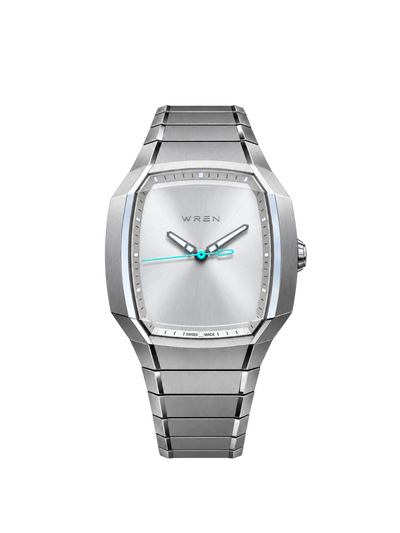
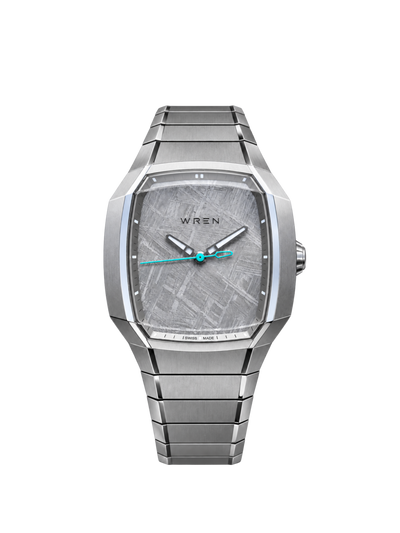
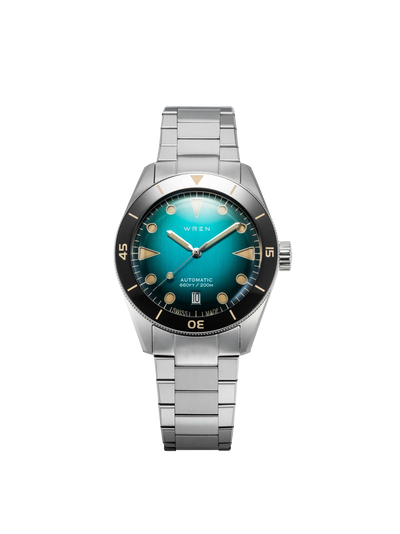
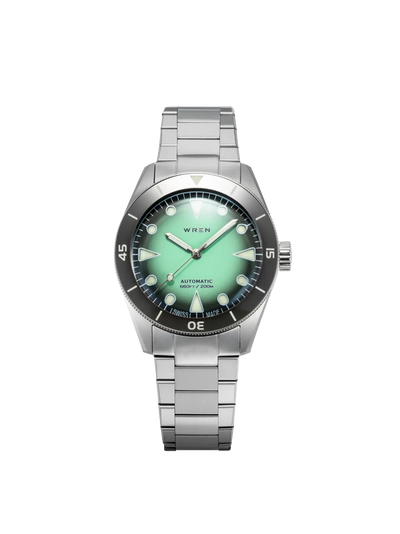
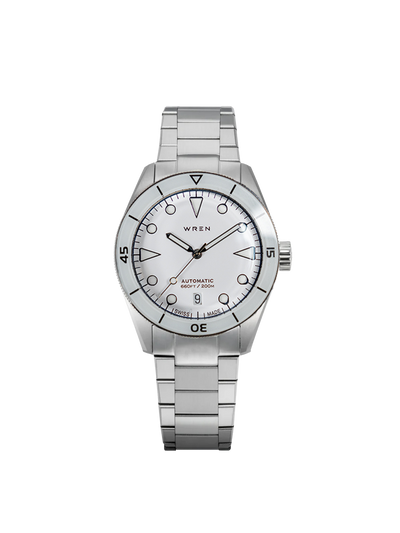
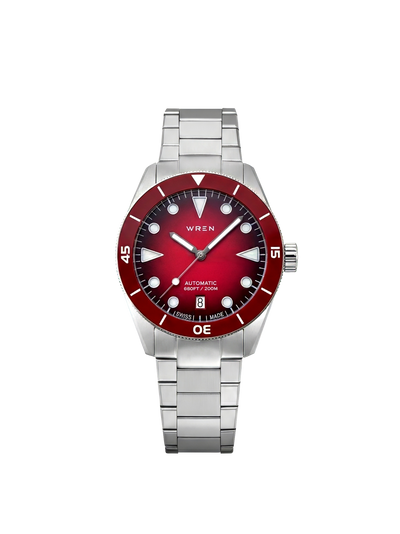
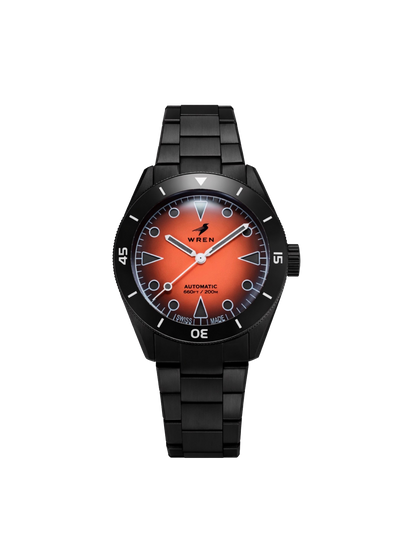
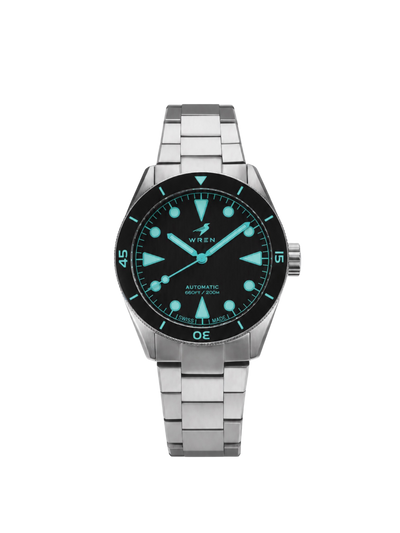
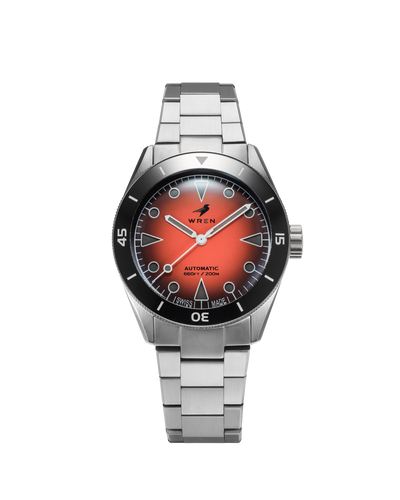
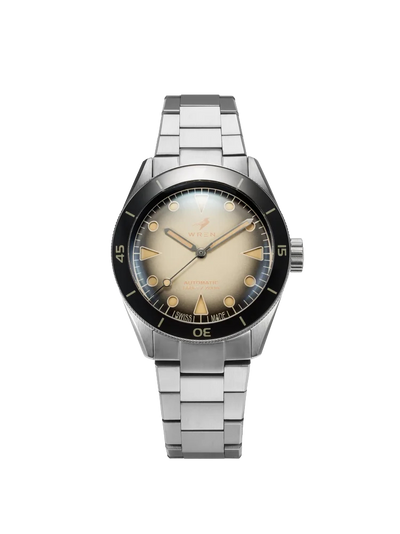
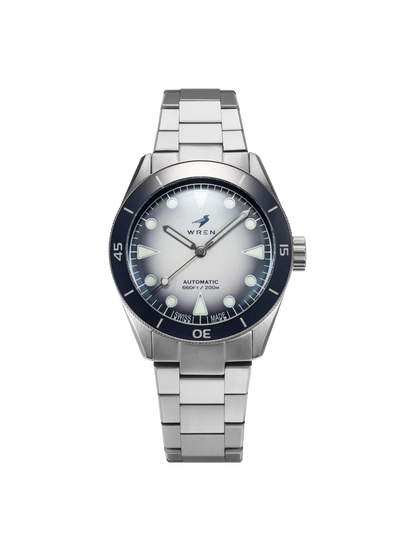
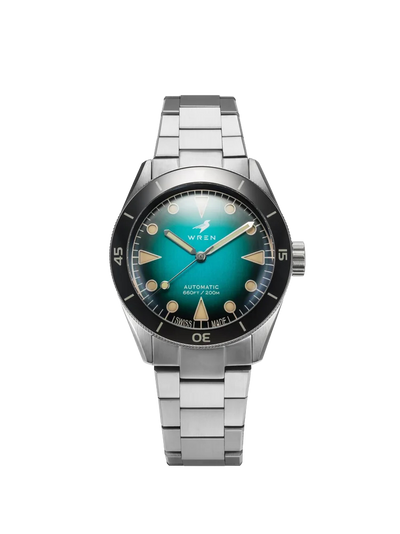

Steel watches scratch because steel is soft. The numbers below show how soft, what the harder materials cost you, and why every Wren leaves the factory with a clear coating that takes the surface to about 800 Vickers.
I remember the first scratch on my Royal Oak. It was on the bezel, the one part of the watch everyone looks at, and it happened within weeks of buying it. I am not sure what did it. Nobody ever is. And I have wanted a Santos for years and never bought one, because the polished bezel is a scratch magnet and I knew exactly how I would feel the first time it happened.
That feeling is the reason every Wren is coated. It is not a feature we talk about much because you cannot see it, which is the point. But it is the reason my own Diver 38 bracelets, two years old and worn hard, have no scratches on them, and I think more people should know why their watches mark up so easily.
Why steel scratches
A scratch is one material being harder than another. Whatever touches your watch, if it is harder than the surface of the watch, it wins. The usual way to measure that is the Vickers scale, where a diamond point is pressed into the material and the size of the dent gives you a number. Higher is harder. Here is where the common watch materials sit.
| Material | Hardness (Vickers) | What that means on the wrist |
|---|---|---|
| Gold | Under 210 | Marks from almost anything, including a shirt cuff over time |
| 316L stainless steel | 150 to 220 | The standard watch case. Door frames, desk edges and keys all scratch it |
| Titanium (grade 2 and grade 5) | Similar range to steel, grade 5 a little harder | Lighter, not meaningfully more scratch resistant, and it marks dull gray |
| Wren clear DLC coat | About 800 | Roughly four times the bare steel, with the steel still looking like steel |
| Chemically hardened steel | About 1,200 | Very hard, but a specialist process used by a few brands |
| Ceramic and sapphire | About 2,000 | Almost nothing in daily life scratches it. It can chip or crack on a hard knock |
Two things fall out of that table. The first is that 316L and 904L and titanium are all in the same soft band. Brands make a lot of the alloy they chose, and the differences are real for corrosion and weight, but none of them change how the watch scratches. The second is that the hard materials are hard in every sense: ceramic and sapphire cases are expensive, they cannot be refinished, and they fail by cracking rather than scratching. For a watch you actually wear, there is a gap between 200 and 2,000 that most brands leave empty.
What we do
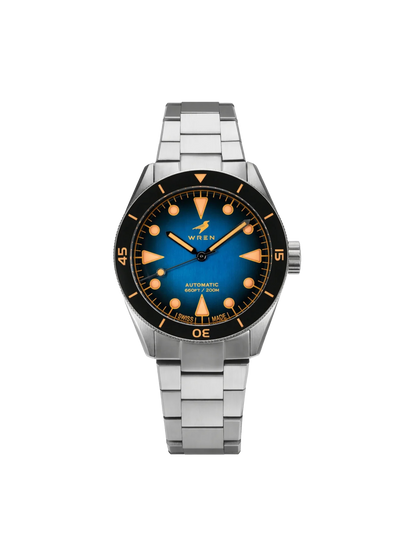
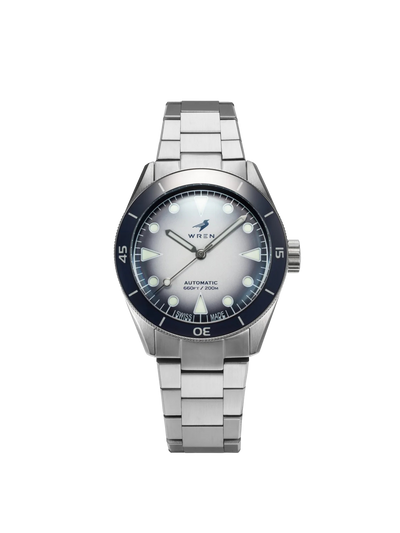
Every Wren case and bracelet is coated in a clear DLC. DLC stands for diamond-like carbon, a thin film of carbon bonded to the steel in a vacuum chamber. Most people know it as the black coating on blacked-out watches, and ours is the same family of coating with the color left out. The finished surface measures about 800 Vickers. The brushing and the polished bevels look exactly the way they would on bare steel, because the film is thin enough that the finish underneath comes straight through.
What changes is what happens when the watch meets a door frame. Steel at 200 Vickers loses that contest to nearly everything. A surface at 800 loses it to very little you will meet in a normal day. It is not armor. Drag the case along concrete and you will mark it. But the small daily damage that turns a bracelet gray and hazy over a year or two mostly does not happen.
The one Wren with a visible coating is the Diver One Obsidian, which uses the black version of the same DLC. Everything else, including the titanium models, is clear.
What it costs
Coating adds cost and a step to every case and bracelet, which is why most brands at this price do not do it. It also changes how the watch ages. A bare steel watch can be refinished by any competent polisher. A coated one should not be, because polishing cuts through the film. In practice this is a trade you want: the reason people refinish steel watches is scratches, and the coating is there so you do not get them in the first place. If you do manage a deep mark, email us and we will tell you what can be done.
Why not just use ceramic or hardened steel
We use ceramic where it earns its place, which is the bezel insert on the divers, and sapphire where it earns its place, which is the crystal and the fully lumed bezel on the Diver 38 Mad. A whole case in either material is a different watch at a different price, and it introduces the one failure a steel watch never has, which is cracking. Hardened steel is a good answer and a couple of brands do it well, but it is a specialist process that locks you into their look. The clear coat lets us build a watch that looks like the steel watches people already love and have it behave like something much harder.
Questions people ask
Is a DLC coated watch scratch proof? No. It is far more scratch resistant than bare steel, roughly four times by hardness, but a hard enough impact against a harder material can still mark it.
Does clear DLC change the look of the steel? No. The film has no color and is thin enough that brushed and polished finishes read exactly as they do on uncoated steel.
Can a coated watch be polished? It should not be. Polishing removes the coating in that spot. Since the coating is there to prevent the scratches people polish out, this rarely comes up.
Is titanium more scratch resistant than steel? Not meaningfully. Grade 5 titanium is a little harder than grade 2 and than 316L, but all of them sit in the same soft band and all of them scratch. Wren's titanium models are coated for the same reason the steel ones are.
Does the coating affect water resistance or the movement? No. It is a surface film a few microns thick applied to the finished case and bracelet. Water resistance ratings are unchanged.
Which Wren watches have it? All of them. Every Wren case and bracelet is clear DLC coated, with the exception of the Diver One Obsidian, which is black DLC.
Sources
Hardness figures for 316L steel, gold, chemically hardened steel, ceramic and sapphire are from Time+Tide's guide to the hardness scale. The 800 Vickers figure for the Wren coating is the specification for the coating we use. If you think we have a number wrong, email hello@wrenwatches.com and we will correct it.
Read next
What 200 meters of water resistance actually means · Lume, explained: BGW9 vs C3 vs X1, and why we lume the whole bezel