
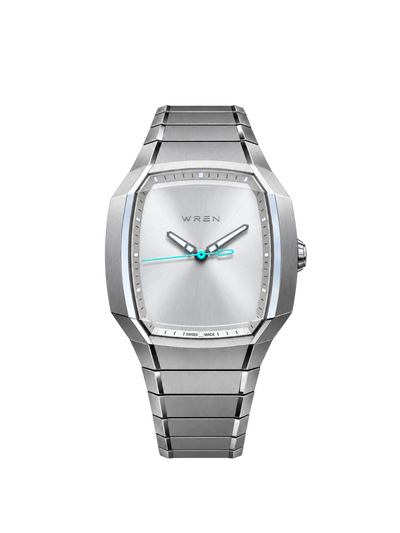
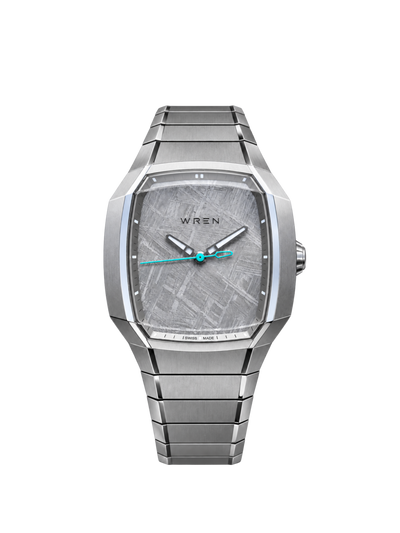
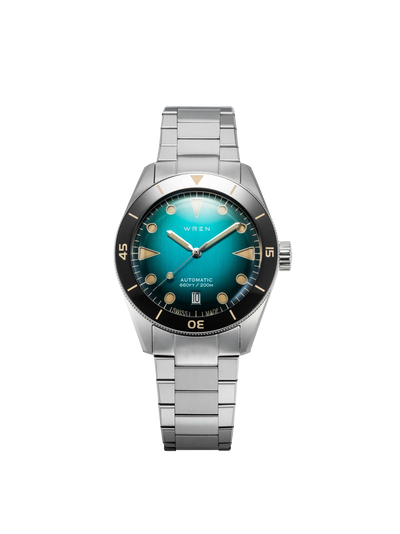
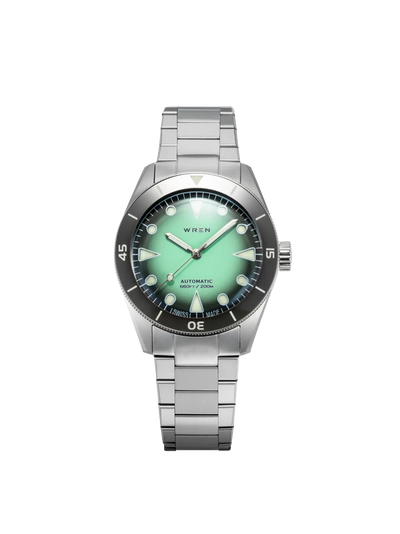
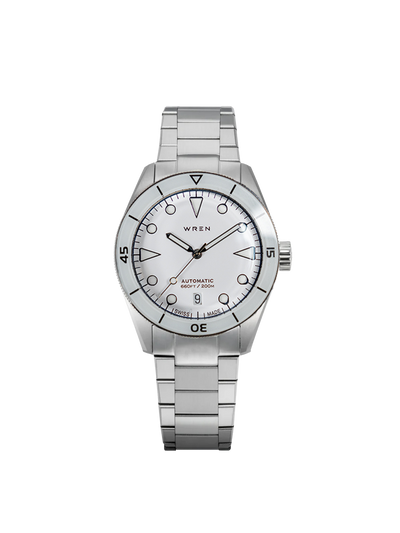
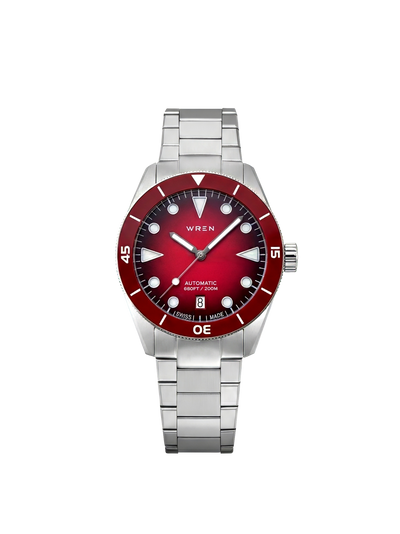
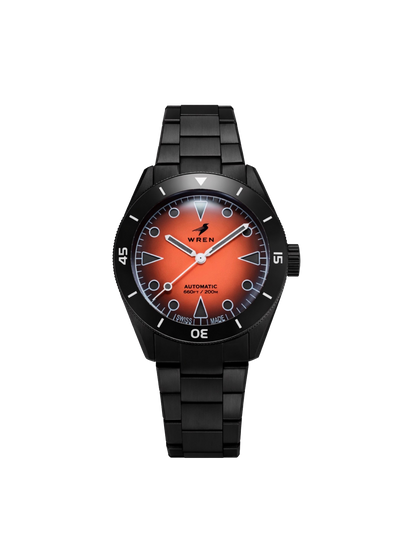
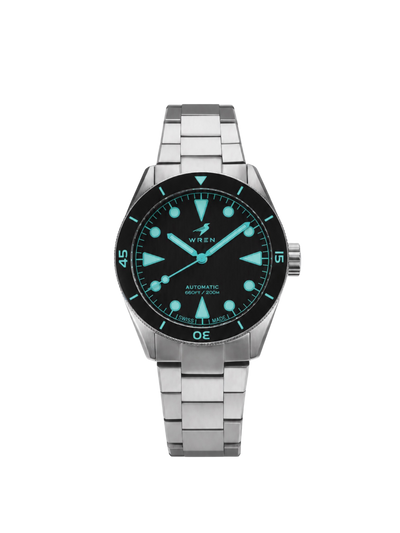
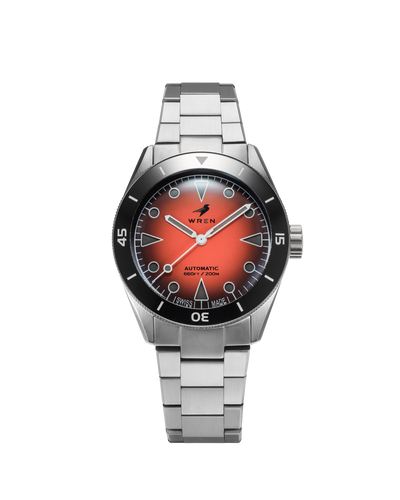
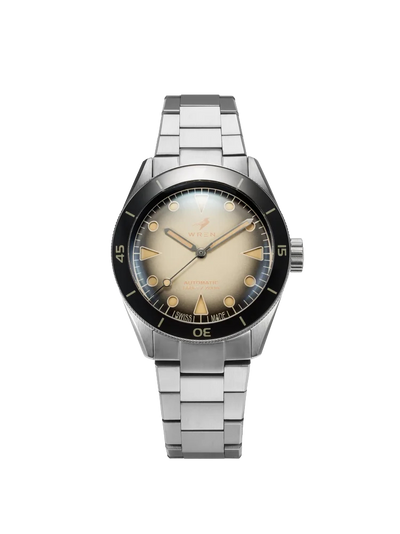
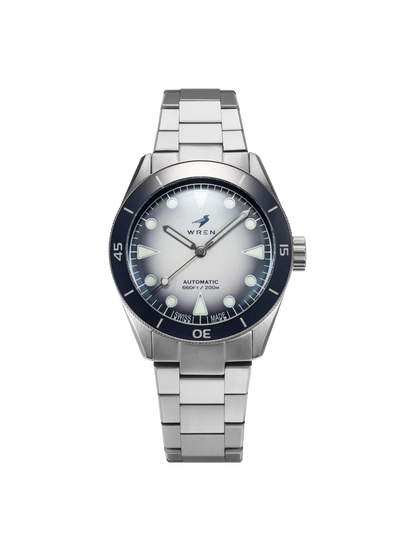
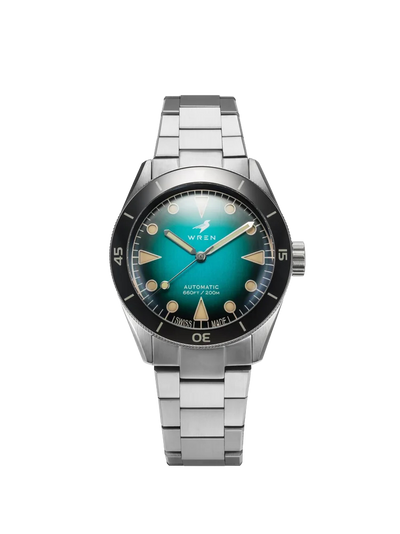

The number on the dial is a lab result, not a depth you can take the watch to. What the test involves, what 30, 50, 100 and 200 meters are good for in real life, what actually floods a watch, and what we cover if it happens to yours.
The question we get more than any other, in one form or another, is whether you can swim in the watch. The answer for every Wren diver is yes, and for the Vessel it is also yes, but the number on the dial does not mean what most people think it means, and knowing what it does mean is the difference between a watch that lasts and a claim form.
What the number is
Water resistance is tested in a chamber, not a pool. The watch sits still in air or water while the pressure is raised to the equivalent of the rated depth and held there. No movement, no temperature change, no time. A watch marked 200 meters has survived 20 bar of static pressure. It has not been to 200 meters, and nobody is suggesting you take it there.
There are two standards behind the marking. ISO 22810 covers every watch sold as water resistant and is a pass or fail at the rated pressure. ISO 6425 is the dive watch standard and is much tougher: every single watch is tested, not a sample, at 125 percent of its rating for two hours, then checked for condensation by heating the watch and putting a cold drop of water on the crystal. It also runs 50 hours underwater, three thermal shocks between 40 and 5 degrees Celsius, a 24 hour salt water soak, and a 200 newton pull on each spring bar. Only watches that pass the whole set may be marked "DIVER'S." The certification is voluntary and expensive, so most dive watches, including ours, are built and rated to the depth without carrying the DIVER'S marking.
What the ratings are good for
| Rating | Use it for | Keep it out of |
|---|---|---|
| 30 meters / 3 bar | Rain, washing your hands | Swimming, showering |
| 50 meters / 5 bar | Showering, shallow swimming | Diving, water sports |
| 100 meters / 10 bar | Swimming, snorkeling, surfing, sailing | Scuba |
| 200 meters / 20 bar | Everything above, plus recreational scuba | Saturation diving |
| 300 meters and up | Professional and saturation diving, usually with a helium valve | Nothing you are likely to do |
The gap between the number and the use is deliberate. A rating is for new seals under still pressure. The chart builds in margin for seals that are a few years old, salt water that is denser than fresh, and the extra pressure of moving your arm through water, which is small (a fast swim adds about five meters of equivalent depth) but not zero.
What actually floods a watch
Almost never depth. In practice it is one of four things.
The crown. A screw-down crown that is not screwed down is an open door. It is the most common way any watch floods, and it is the reason the warranty excludes it. Check it before you get in.
Old gaskets. The rubber seals at the crown, caseback and crystal dry out and flatten over years. A watch that was 200 meters at new is not 200 meters at year eight with the original gaskets. Our service interval is five to seven years and the gaskets are replaced as part of it.
Heat and chemicals. Hot tubs, steam rooms and long hot showers expand the seals and let soap and chlorine at them. A rinse under the tap after the sea is good for a watch; a daily hot shower is not. Sunscreen and insect repellent degrade rubber straps and gaskets alike.
A knock. A hard hit on the crown or the crystal can unseat a seal without any visible damage. If the watch takes a real knock, have it pressure tested before it goes back in the sea.
What it means for a Wren
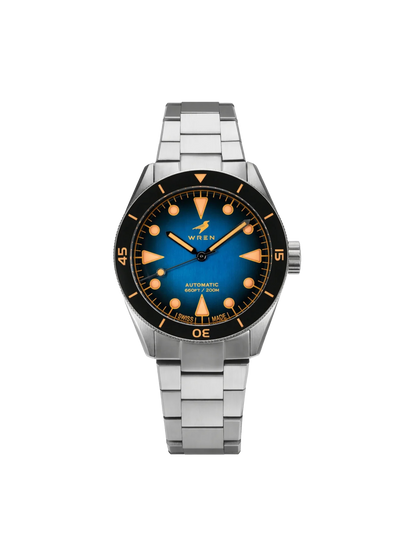
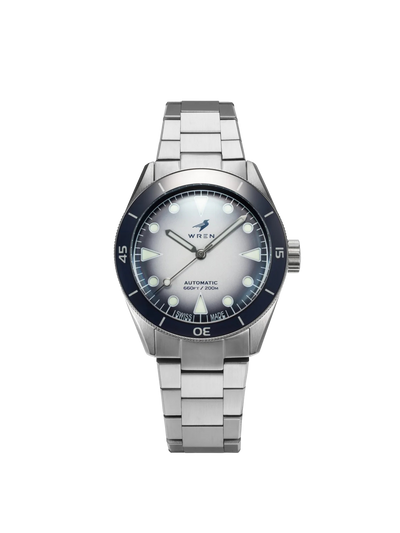
The Diver One, Diver One Titanium and Diver 38 are rated to 200 meters with a screw-down crown. Swim, snorkel, surf and scuba with them, and rinse them in fresh water afterward. Screw the crown down every time, and if you set the time at the beach, screw it down before you go back in.
The Vessel is rated to 70 meters with a push-pull crown. It is a sports watch, not a dive watch. Swim in it, and leave it on the towel for anything with a regulator.
What we cover
Water damage is covered under the two year warranty unless the crown was left unscrewed or the case was opened by someone other than us. If a Wren floods with the crown screwed down and the case untouched, that is on us, and we pay shipping both ways. If you are not sure whether something counts, email hello@wrenwatches.com before you send it anywhere.
Questions people ask
Can I swim with a 200m watch? Yes. 200 meters covers swimming, snorkeling, surfing and recreational scuba, as long as the crown is screwed down and the seals are in good condition.
Can I shower with a dive watch? You can, and it will not flood from the water. Heat and soap shorten the life of the gaskets, so it is better not to make a habit of it.
Does 200 meters mean I can dive to 200 meters? No. It means the watch passed a static pressure test at 20 bar. Recreational scuba stays above 40 meters and the rating gives a wide margin above that.
Is 100m enough for swimming? Yes. 100 meters is fine for swimming, snorkeling and water sports. It is 30 and 50 meter watches that should stay dry.
Can I swim with the Vessel? Yes. It is rated to 70 meters with a push-pull crown, which is fine for swimming and snorkeling. Do not dive with it.
How often should the seals be replaced? Every five to seven years, as part of a service. If the watch is used in the sea regularly, have a watchmaker pressure test it every couple of years, which takes minutes and does not require opening the case.
What should I do if I see fog under the crystal? Take it out of the water, pull the crown out to let it breathe, and email us. Do not leave it to dry on its own; moisture inside a movement does its damage in days.
Sources
The test procedures and the rating chart are from ISO 22810 and ISO 6425 as summarized on Wikipedia's Water Resistant mark page. Wren ratings, service interval and warranty terms are from our own FAQ. If you think we have something wrong, email hello@wrenwatches.com and we will correct it.
Read next
How to set a dive bezel, and three things it is for besides diving · Why watches scratch so easily, and why every Wren is coated