
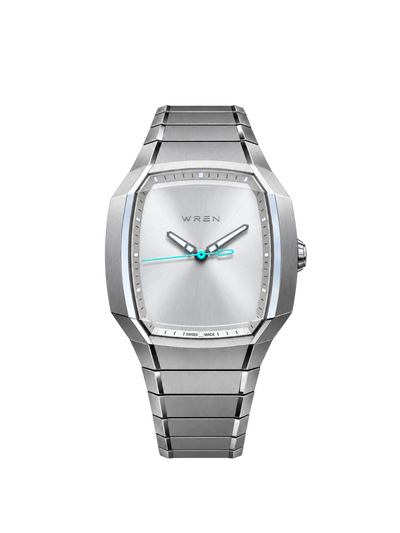
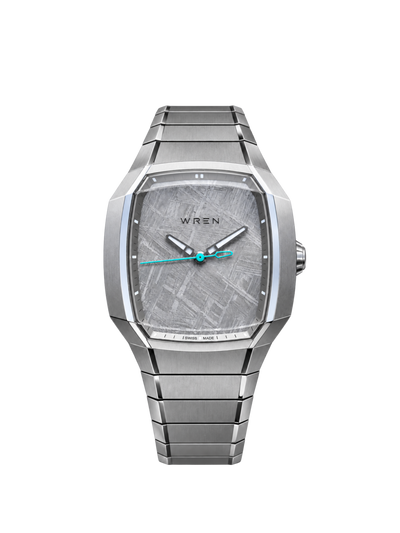
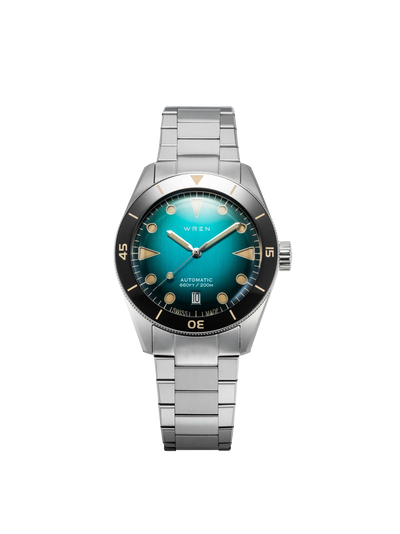
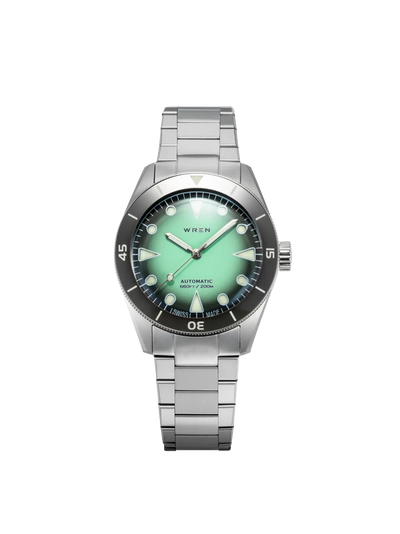
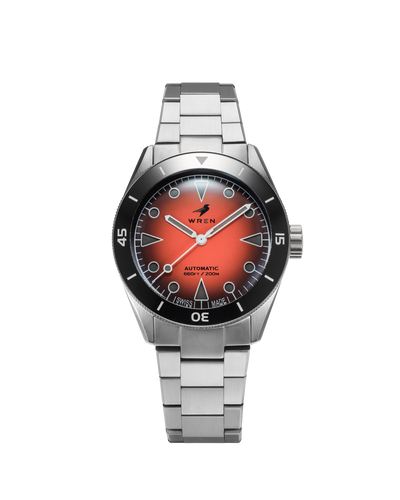
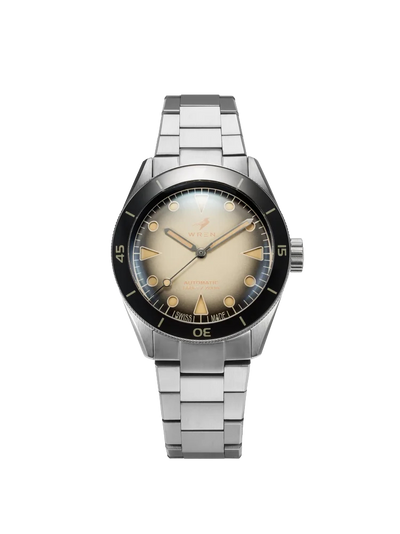
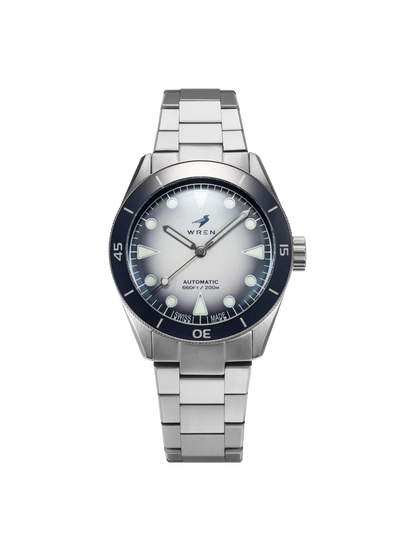
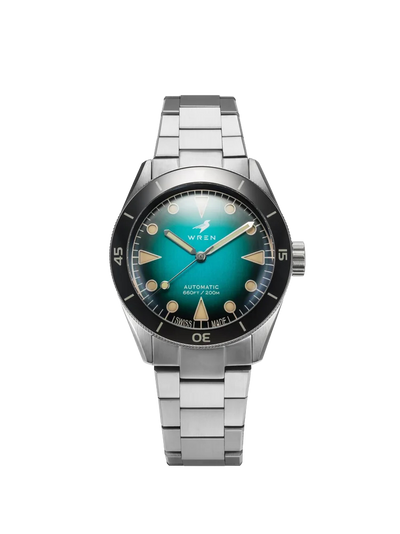

The first run of Vessel crystals came back with a 95 percent failure rate. Our first manufacturer declined to try again. This is how the second one got it to work, and why the underside had to be cut at all.
Most sapphire crystals are flat, or domed, and that is the end of the conversation. The Vessel's is faceted across twelve and six, and those facets curve. Other brands have cut facets into a crystal before. What nobody had done was cut the same facets again on the underside, so that light leaves the crystal the way it came in.
Why cut both sides at all?
Because a facet on top with a dome beneath bends light twice through two different shapes, and the dial warps wherever a facet crosses it. Tilt the wrist and the twelve and six markers smear or split. Cut the underside as the negative of the top and the distortion goes away. That was the whole brief: a faceted crystal with a dial that reads true from any angle.
What went wrong the first time
The first prototypes had a curved facet on top and a straight facet beneath. From the corners the two edges agreed. Through the middle they drifted apart, and the dial under the facet still bent. Out of a hundred crystals cut, five were usable.
We sent them back and asked for the underside to follow the top. Our manufacturer told us, politely, that the part could not be made. Every sapphire house we approached after that passed. The one that eventually said yes makes sapphire cases, not crystals, which turned out to be the point. They were used to cutting the material in three dimensions.
What it costs
Round two came back correct, at a 20 percent failure rate, which is roughly where production sits today. The crystal costs more to make than the Sellita movement behind it. At this price that is backwards, and it is the reason the Vessel exists.
The facts
| Crystal | Sapphire, faceted and curved on both surfaces, underside cut as a curved faceted negative of the top, AR coating on the underside |
| Facets | Across twelve and six only. None at three and nine |
| First prototype yield | 5 of 100 |
| Production yield | About 80 of 100 |
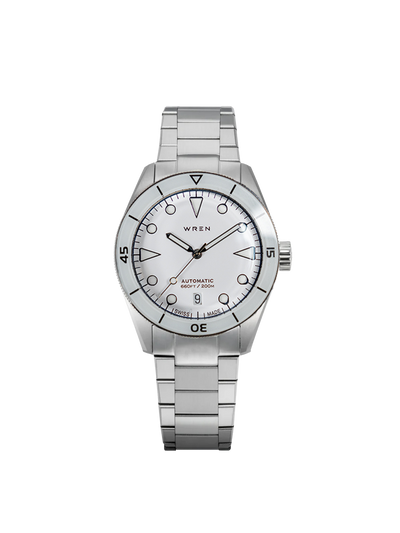
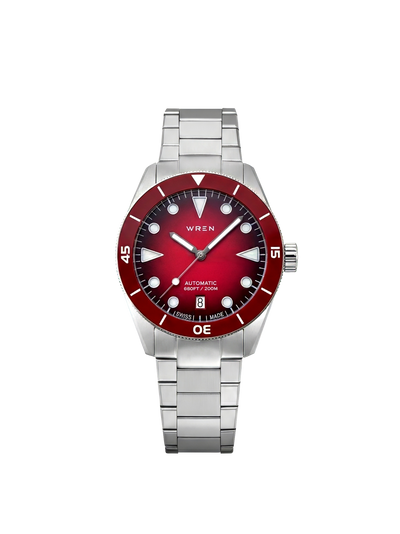
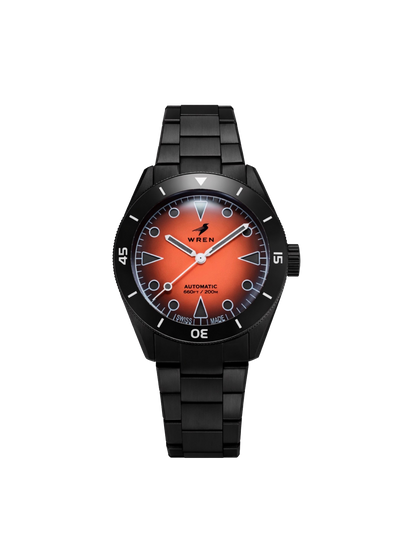
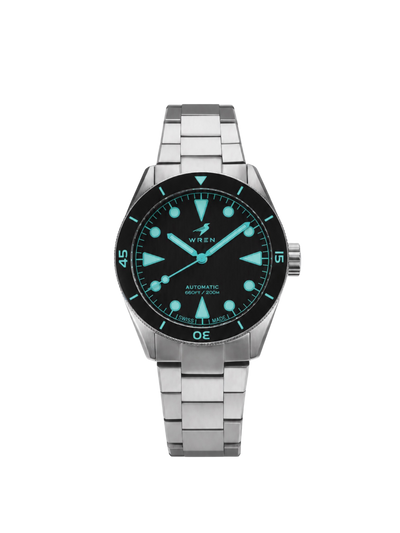
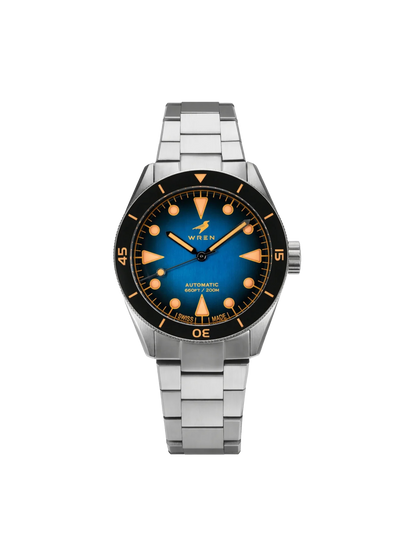
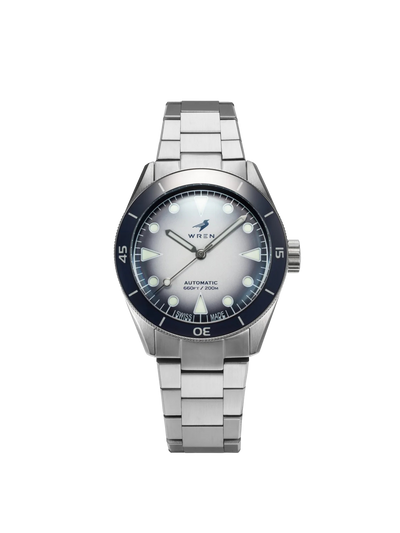
| In the watch | Wren Vessel, 39mm, 904L steel, Sellita SW300-1, from $2,900 |
Questions this note answers
Why is the Vessel crystal cut on both sides? So the dial does not distort. A facet on top over a smooth underside bends light unevenly; matching facets underneath cancel it.
Is a faceted sapphire crystal hard to make? Faceting the top is routine. Faceting the underside to follow a curved top edge is what took two rounds of prototypes and a manufacturer willing to try.
Does a faceted crystal distort the dial? On most watches that have one, yes, at the facet. On the Vessel, no.
The Vessel Sunray is open for preorder, 150 pieces, delivering Q1 2027.
Read next
Why faceted watch crystals distort the dial, and how the Vessel doesn't · Why watches scratch so easily, and why every Wren is coated