
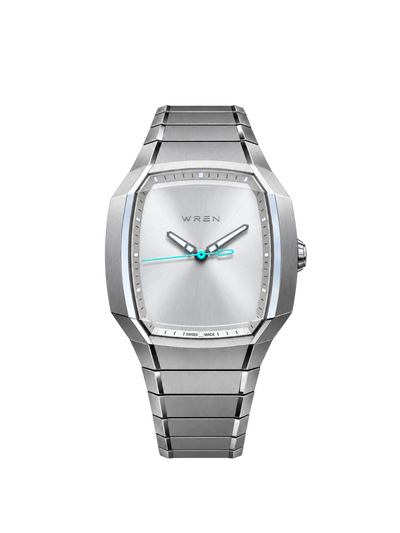
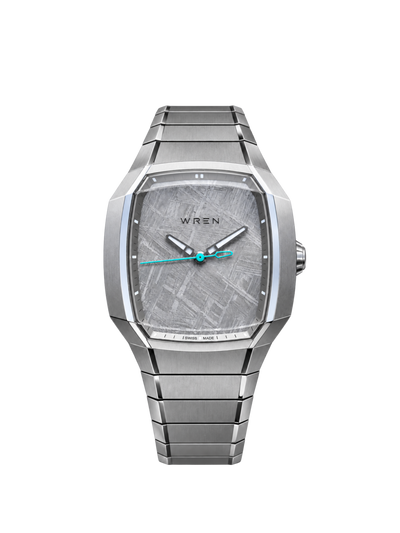
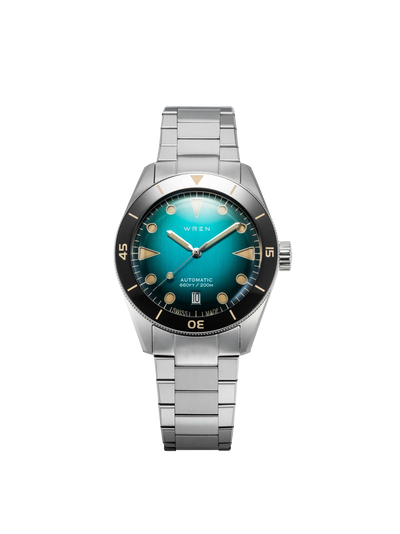
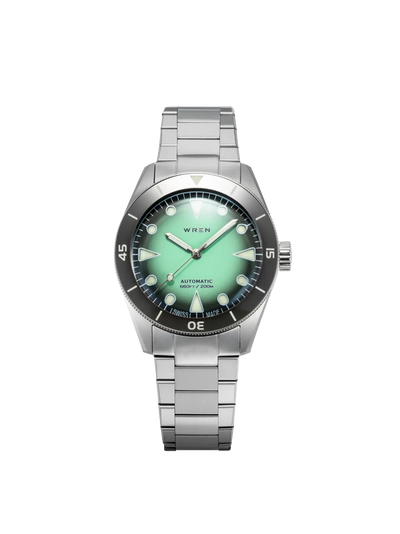
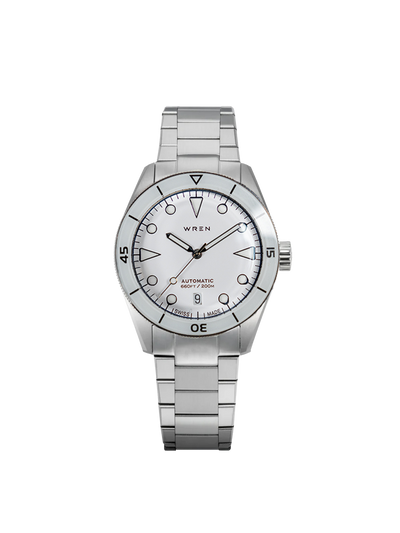
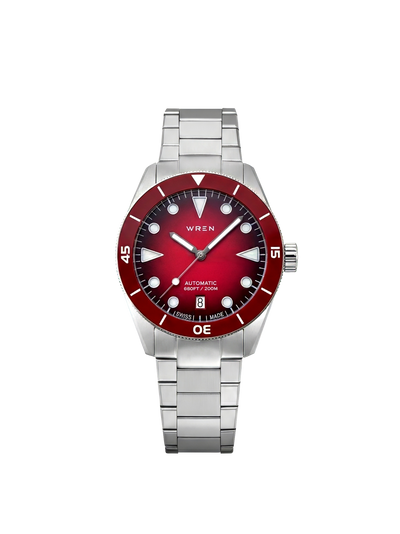
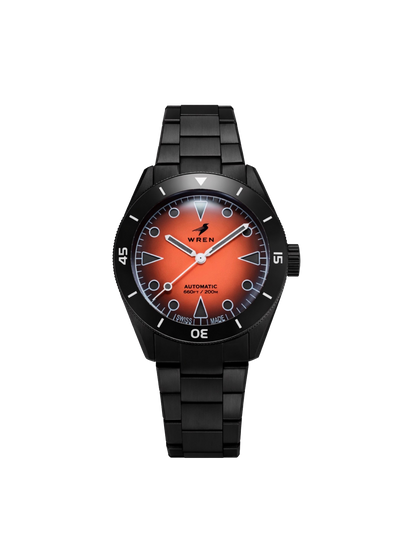
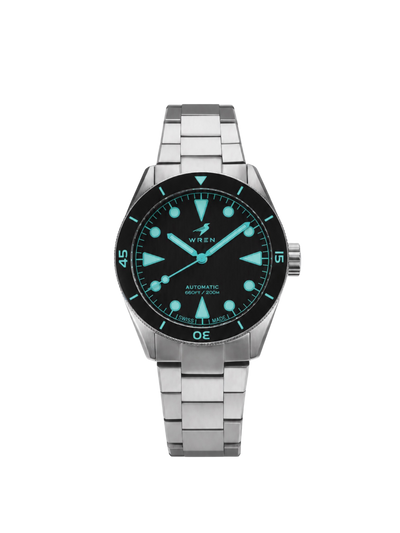
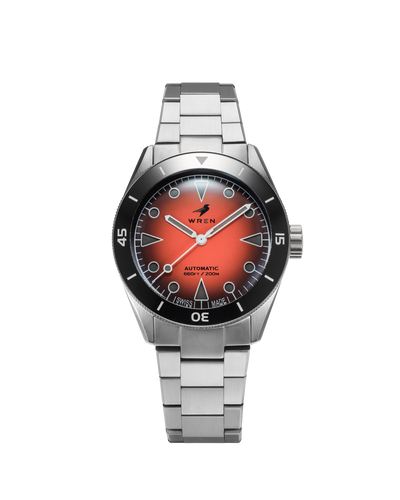
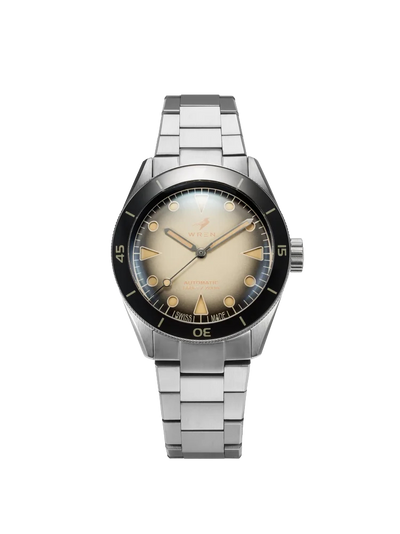
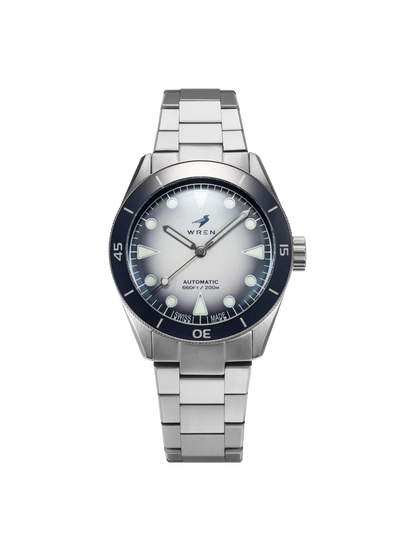
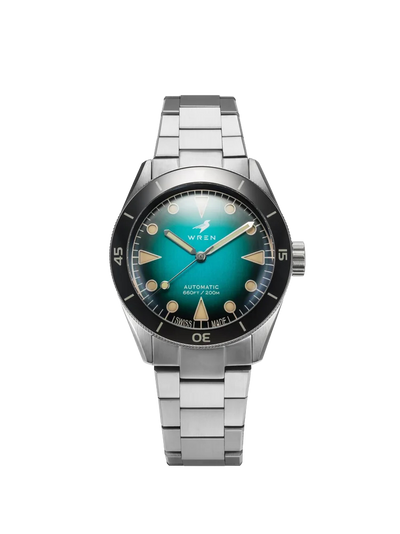
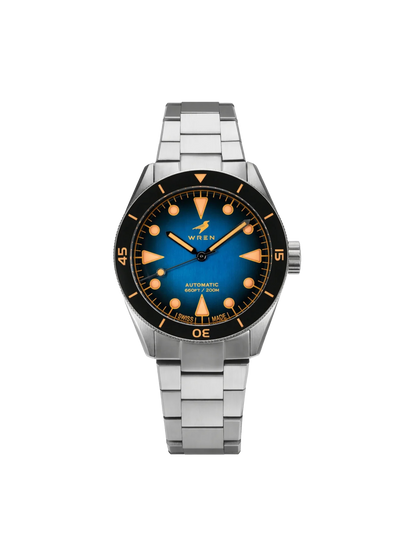
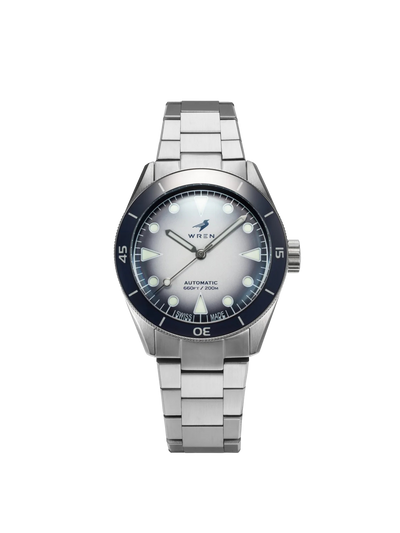

Titanium is roughly 40% lighter than stainless steel and nickel free, so it suits anyone who wants a lighter watch or has a nickel allergy. Stainless steel is heavier, brighter and easier to polish, which is why most watches are still made from it.
For most of watchmaking history, a sports watch was made of stainless steel, and nobody thought twice about it. Then titanium arrived in the 1970s, first in tool watches and then in dive watches, and today it's offered by everyone from small independent brands to Rolex. That leaves a lot of people looking at the same watch in two metals, a few hundred dollars apart, wondering whether the titanium version is really worth it.
We've had to answer that question ourselves. We build Wren watches in both metals, and partway through developing the Diver One Titanium we threw out our first prototypes and switched to a different grade of titanium altogether. Here's what we learned about weight, scratches, allergies, looks and cost, and one thing that matters more than the metal: every Wren case and bracelet is DLC coated, whatever it's made of.
Weight: titanium is about 40% lighter
Grade 5 titanium weighs about 4.4 grams per cubic centimeter. Stainless steel weighs about 7.9. Cut the same case from each and the titanium one comes in a little over half the weight.
The whole watch doesn't drop by that much, because the movement, crystal and dial weigh the same in either metal. On a full titanium bracelet the difference is still obvious the moment you pick it up.
That lightness is the main reason people choose titanium. A 41mm dive watch that disappears on the wrist is easier to wear all day, to sleep in and to forget about during exercise. Some people prefer steel for the opposite reason: they like feeling the weight.
Scratches: it depends on the grade
"Titanium" in watches usually means one of two grades, and they behave very differently.
| Spec | Grade 2 titanium | Grade 5 titanium | 316L stainless steel |
|---|---|---|---|
| What it is | Commercially pure titanium | Titanium alloyed with aluminum and vanadium | The standard watch steel |
| Weight | Lightest | About 40% lighter than steel | Heaviest |
| Hardness | Similar to steel, scuffs easily | A little harder than 316L steel | The baseline |
| Color | Warmer, slightly yellow-gray | Cooler gray, close to steel | Bright, silvery |
| Polish | Hard to keep a mirror finish | Takes a fine polish | Polishes easily |
Grade 2 is cheaper and easier to machine, which is why many affordable titanium watches use it. It picks up scuffs quickly. They show as dull gray marks rather than bright lines, so they're less obvious than they sound.
Grade 5 costs more and is harder to cut, but it resists scratches better and holds sharper edges and finishes.
We found the color difference for ourselves. The first Diver One Titanium prototypes were made in Grade 2, and the metal had a yellow cast we didn't like next to the dial. We moved production to Grade 5, and the difference surprised us: finished and coated, our Grade 5 titanium looks remarkably similar to steel.
Coatings change the picture too. We DLC coat everything we make: every Wren case and bracelet, steel or titanium, gets a clear coating that brings the surface to about 800 Vickers, several times harder than either bare metal. So on a Wren, the choice of metal is about weight and feel, not scratches. Here's why we coat every watch and how the hardness numbers compare.
Allergies: titanium is nickel free
Nickel is one of the most common skin allergies, and 316L stainless steel contains about 10 to 13% nickel. The nickel is bound into the alloy, and EU rules cap how much any steel worn against the skin may release, so most people with a mild sensitivity wear steel watches without trouble.
If you've reacted to steel before, titanium is the safer choice. It contains no nickel, which is why it's used for surgical implants and earrings for sensitive ears. Check the caseback and buckle too, since some "titanium" watches use steel parts there.
Look, feel and cost
- Look: steel is bright and reflective. Grade 2 titanium is darker and warmer. Grade 5 can look remarkably like steel, and ours does: side by side, a titanium Wren is hard to tell from a steel one until you pick it up.
- Temperature: titanium conducts heat less readily than steel, so it doesn't feel as cold when you first put it on.
- Corrosion: both handle sweat and salt water well. Titanium is even more resistant, which is one reason it's used in marine and medical hardware.
- Cost: titanium is harder to machine and finish, so a titanium version of a watch usually costs a few hundred dollars more than the steel one.
Which should you choose?
Choose titanium if you want the lightest watch for all-day wear, you have a nickel allergy, or you want the look of steel without the weight.
Choose stainless steel if you like a watch with some heft, want a bright polished finish, or want the most choice of models at a lower price.
We make both. The Diver One Titanium is a 41mm, 200m diver in Grade 5 titanium, 12.4mm thick, and the lightest watch we make. The Diver 38 and the Vessel are stainless steel, for anyone who wants that solid, weighty feel.
Questions people ask
Is titanium better than stainless steel for a watch?
Neither is better overall. Titanium is lighter and nickel free. Steel is brighter, heavier and easier to polish.
Does a titanium watch scratch more easily?
Grade 2 titanium scuffs easily. Grade 5 is a little harder than 316L steel. A hard coating such as DLC protects either metal far more than the choice between them.
Is titanium hypoallergenic?
Yes. It contains no nickel, which makes it the better choice for anyone with a nickel allergy.
Why are titanium watches more expensive?
Titanium is harder to cut and finish than steel, and Grade 5 costs more again, so the case takes longer and more tooling to make.
What's the difference between Grade 2 and Grade 5 titanium?
Grade 2 is pure titanium: softer, cheaper and slightly yellow in tone. Grade 5 is an alloy: harder, closer to steel in color and better at holding a finish.
Can you polish a titanium watch?
Yes, but it's harder than polishing steel, especially Grade 2. Many titanium watches use a brushed or blasted finish for that reason.
Sources
- Grade 5 titanium vs stainless steel (density and hardness)
- 316L stainless steel watch cases (nickel content and EU nickel rules)
Read next
Why watches scratch so easily, and why every Wren is coated · The 38mm dive watch, compared