
The number on the spec sheet that only matters on a Monday morning.
I've been collecting watches for over 25 years, and for most of that time I'll admit I never gave the power reserve a second thought. It was a number on the spec sheet, somewhere between the water resistance and the lug width, and as long as it said something over 40 hours I moved on. Then I started making watches, and suddenly it was one of the two or three numbers I thought about most. So let's get into what the power reserve actually is, why it matters more than you'd think, and why we went out of our way to put a 56-hour movement in the Diver 38.

What the number actually means
The power reserve is how long a mechanical watch will keep running from fully wound to stopped, with nobody wearing it. That's it. An automatic winds itself while it's on your wrist, so the reserve only comes into play when the watch comes off. Which is why I say it's the number that only matters on a Monday morning.
Here's the scenario, and if you own more than one watch you've lived it. You take a watch off Friday night and put it on the dresser. You wear something else over the weekend. Monday morning you reach for it again. With a 38-hour movement, that watch stopped sometime Sunday morning, and you're setting the time and the date before you've had coffee. With a 42-hour movement it died Sunday afternoon. With 56 hours, it's still running when you pick it up, and you put it on and go. Fifty-six hours is two full days plus a buffer, and the buffer is the whole point. Friday night to Monday morning is about 60 hours, so even 56 is cutting it close, but in practice the watch was never fully unwound when you took it off either, so it tends to work out.
That's the honest, practical version. A longer power reserve doesn't make a watch better at being a watch. It makes it better at being one of several watches.
Where the hours come from
Inside every mechanical movement is a mainspring, a long ribbon of steel coiled inside a drum called the barrel. Winding the watch tightens the coil; the coil unwinding is what drives everything else. The power reserve is basically a function of how much spring is in that barrel and how fast the movement spends it. You can get more hours by using a longer spring, a bigger barrel, two barrels, or by slowing the balance down so it draws less energy per hour.
That last option is the one to watch out for, because it's how a lot of the very long reserves you see in the sub-$1,000 world get made. Slowing a movement from 28,800 beats per hour to 21,600 stretches the reserve considerably, but a slower beat is generally less stable, and the seconds hand sweeps visibly less smoothly. There's no free lunch. The Sellita SW300-1 in our Diver 38 and Vessel runs at the full 28,800 and still gets to 56 hours, which is why I was happy to pay for it.

One more thing nobody tells you: a mainspring doesn't deliver the same push from start to finish. It's strongest fully wound and weakest just before it stops, and most movements keep their best timekeeping in the first two thirds of the reserve. So a watch with a 56-hour reserve isn't just running longer, it's spending more of its week in the part of the curve where it keeps the best time. That's a nice side effect, not the reason to buy one, but it's real.
Does the rotor actually keep it topped up?
This is the question I get from people who sit at a desk all day, and it's a fair one. The rotor in an automatic swings when your wrist moves, and every swing adds a little tension to the spring. If you're typing at a keyboard for eight hours, your wrist is moving a lot less than you think, and a watch can slowly lose ground over a desk-bound week. It won't stop on your wrist, but it may not be at full wind when you take it off Friday night, which eats into that weekend buffer.

Two things help. The first is giving it twenty or thirty turns of the crown when you put it on in the morning, which every automatic I've owned appreciates and which takes ten seconds. The second is, again, a longer reserve, because it means the watch has more room to lose ground before it matters.
While we're here: you don't need a watch winder for a watch with a 56-hour reserve unless you own so many watches that one of them is going a week without being worn. If that's you, you have a nicer problem than most.
Which Wren has which reserve, and why
The Diver One, in steel and titanium, runs the Sellita SW200-1 and the ETA 2824 respectively, both 38-hour movements. They're workhorses, they've been in Wren since the first watch, and 38 hours is perfectly livable if you wear the watch most days. If you own three watches and rotate, you'll be setting it on Mondays. I'll be straight about that.

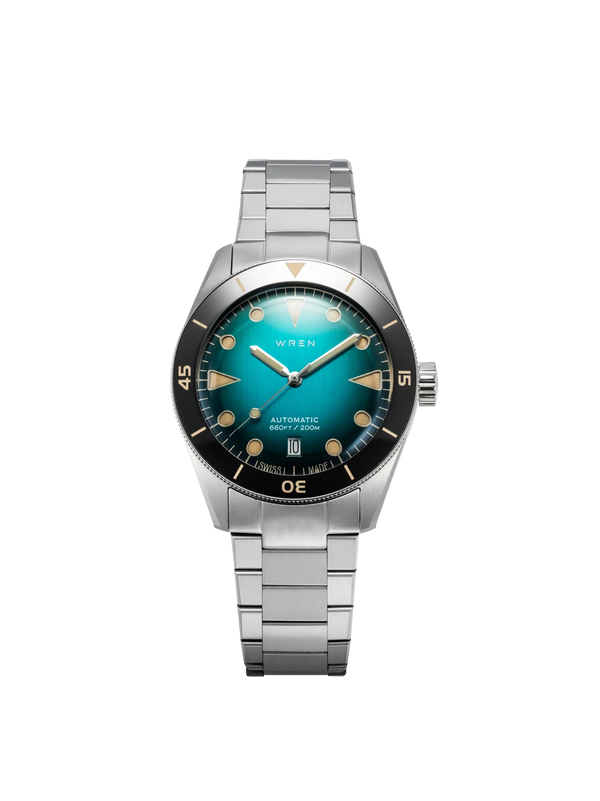
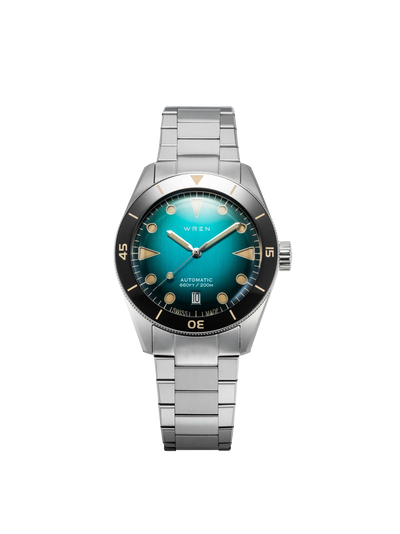
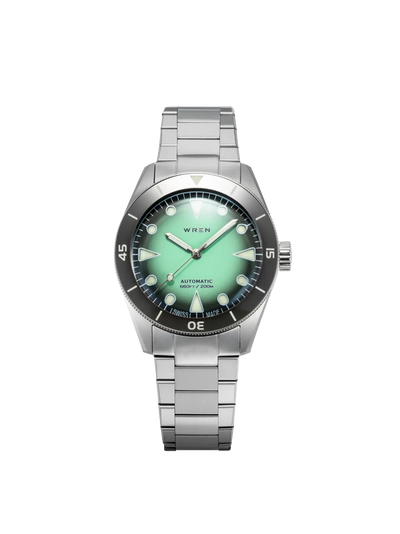
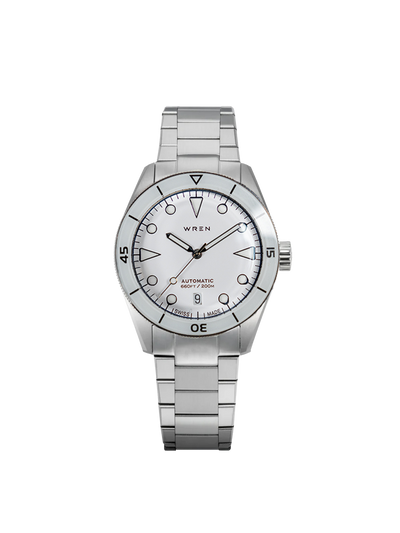
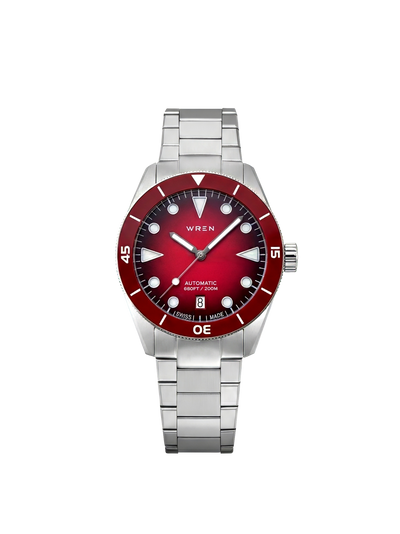
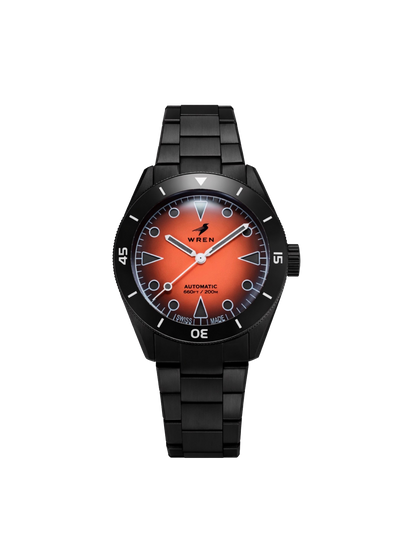
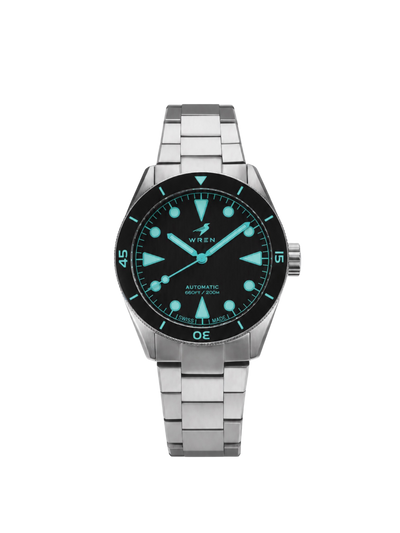
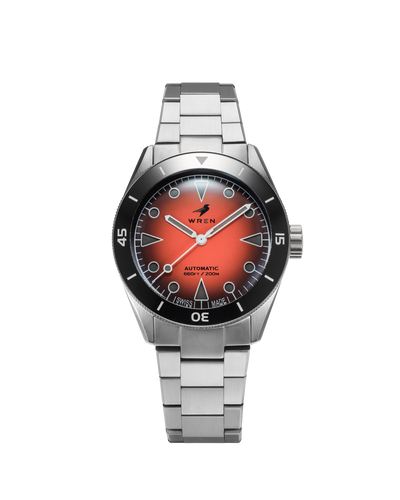
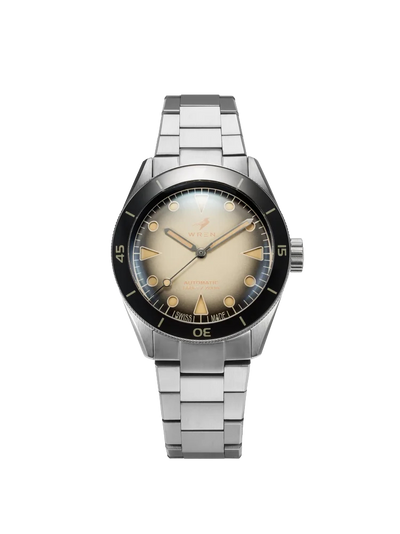
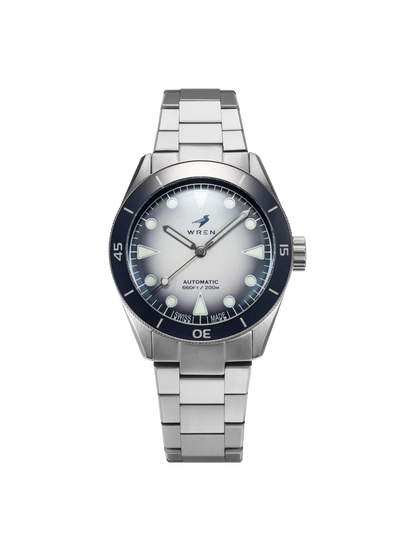
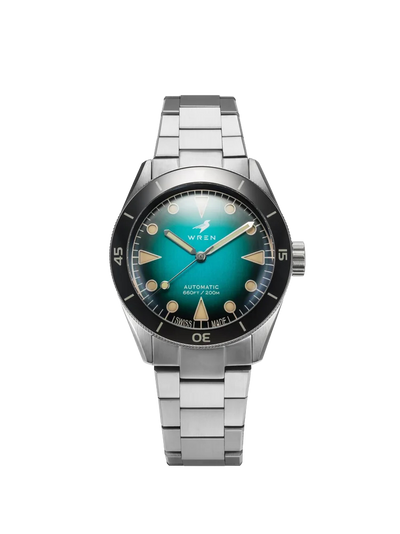
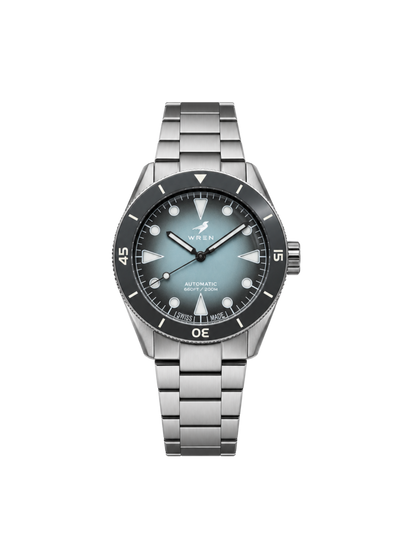
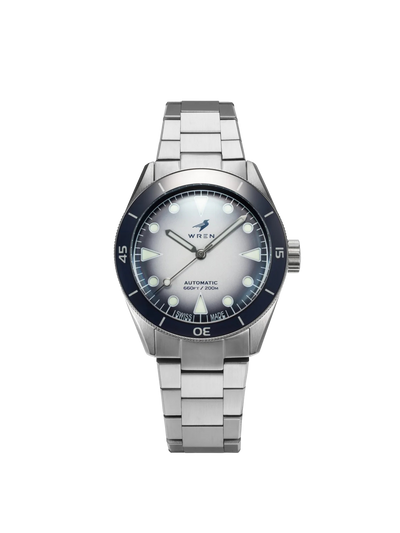
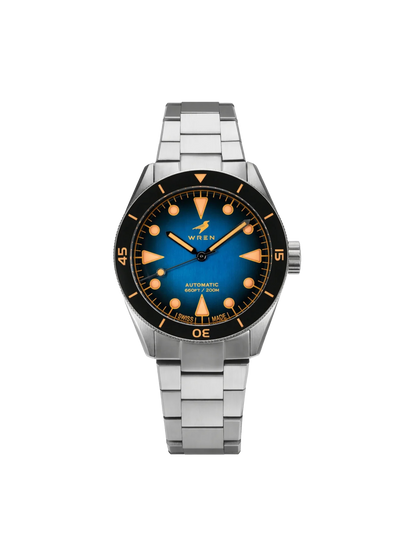
The Diver 38 and the Vessel run the Sellita SW300-1, which holds 56 hours. The Diver 38 started life with the ETA 2892-A2, a thinner, higher-grade movement with a 42-hour reserve. When we moved to the SW300-1 it was for two reasons: supply, because we could get them, and the reserve, because the newer SW300-1 is the version with the extended mainspring. The two movements are otherwise close enough that the watch didn't change in size or shape at all. Fourteen more hours was the whole difference, and it's the difference between a watch that stops over the weekend and one that doesn't.
If you're buying a Diver 38 or a Vessel, 56 hours means this: wear it Thursday and Friday, leave it alone all weekend, and put it on Monday without touching the crown. That's the feature. It's a small one, and it's one you'll use more than most.
Questions people ask
What is a good power reserve for an automatic watch? Anything over 40 hours covers a normal day off the wrist. 56 hours or more covers a weekend, which is the threshold that actually changes how you live with the watch.
Does a longer power reserve mean a better movement? Not by itself. Some long reserves come from a slower beat rate, which is a trade-off. A long reserve at a full 28,800 beats per hour, like the SW300-1, is the combination worth paying for.
How long does a Wren run off the wrist? The Diver 38 and the Vessel run about 56 hours. The Diver One and Diver One Titanium run about 38.
Should I hand-wind my automatic watch? When you put it on after it's been sitting, yes. Twenty or thirty turns of the crown gets it to full wind faster than your wrist will, and it's good for the watch.
Do I need a watch winder? Only if a watch is going more than its power reserve between wears and you don't want to reset it. For most people with a 56-hour watch, no.
Why did Wren switch the Diver 38 from the ETA 2892 to the Sellita SW300-1? Supply, and the extra fourteen hours of reserve. Everything delivered before November 2026 has the ETA; watches shipping from November 2026 have the Sellita, with limited exceptions.
Read next
Sellita vs ETA: are they the same? · Date or no date · Watch thickness explained